Vissi d’arte: A Flower on Stone and the Stubbornness of Beauty
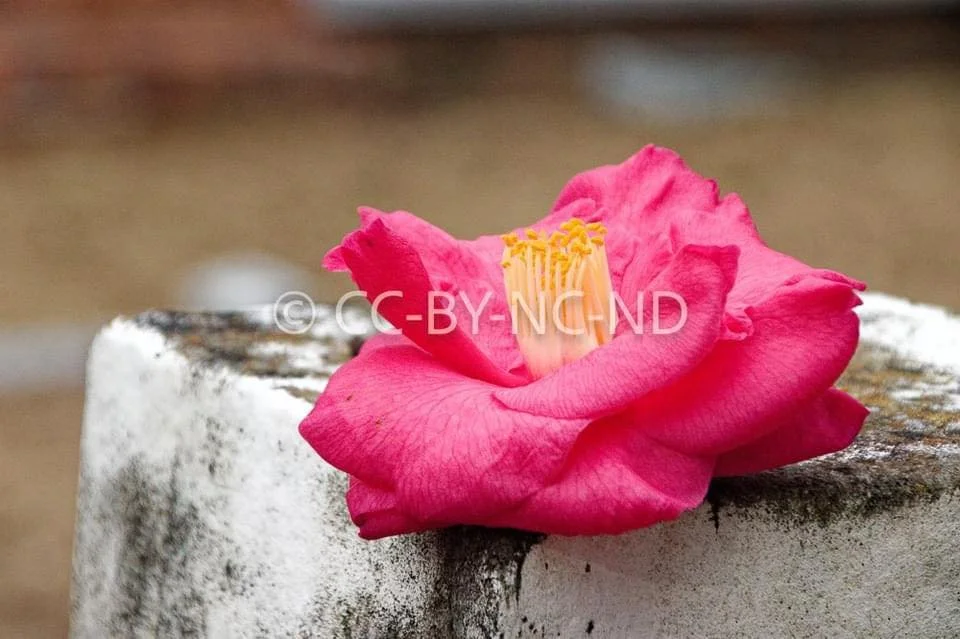
A flower on stone: fragile, stubborn, and entirely unwilling to let hardness have the final word.
There is something about Puccini’s “Vissi d’arte” from Tosca that reaches me differently these days. The title means “I lived for art,” and Tosca sings it as both prayer and protest. She has lived for art, love, and faith, and still finds herself standing in the middle of suffering, asking the oldest human question: Why? Why this? Why now? Why, after trying to live with beauty and devotion, does pain still come knocking like an unwanted relative who has no sense of timing?
That question feels very close to me right now.
As I deal with physical pain, wound care, treatments, bedrest, and the general indignities of the body behaving like a badly managed committee, this aria has become more than music. It has become a companion. Tosca does not sing from a place of neat answers. She sings from bewilderment. She sings from exhaustion. She sings from that sacred human place where faith, fear, and frustration all sit at the same table and refuse to leave until someone makes coffee.
Virginia Woolf understood this strange territory. In “On Being Ill,” she writes about how illness changes the world around us, how the body suddenly becomes impossible to ignore, and how sickness gives us a different, often lonelier, perspective on life (Woolf, 1926/2002). She noticed what many of us learn the hard way: when the body suffers, the mind does not simply carry on as usual. The ceiling becomes a landscape. A room becomes a monastery cell. A doctor’s appointment becomes a pilgrimage. A wound dressing becomes a whole emotional opera in three acts, with no intermission and very questionable lighting.
And yet, beauty still finds a way in.
That is why this photograph means so much to me. A bright flower resting on cold stone feels like a little sermon without words. Fragile, yes. Temporary, certainly. But also bold. The flower does not apologize for being beautiful in a hard place. It simply blooms where it has landed, which is frankly more than I manage some mornings before coffee.
Emily Dickinson also knew that pain and beauty often live very close together. Her poetry returns repeatedly to suffering, hope, death, endurance, and the strange power of the inner life. In “Hope is the thing with feathers,” she imagines hope as something small but persistent, singing even in the storm (Dickinson, 1891/1999). That image feels especially right to me now. Hope is not always loud. Sometimes it is not triumphant. Sometimes hope is simply the small voice that says, “Get through today. Let tomorrow worry about itself. Also, maybe listen to Puccini.”
So when I hear “Vissi d’arte,” I hear Tosca asking God why her life of beauty has led her to anguish. I hear Woolf reminding us that illness reveals parts of existence that health often hides. I hear Dickinson whispering that hope may be fragile, but it is also stubborn. And I see this flower, resting against stone, insisting that tenderness and strength are not opposites.
I have lived for art. I have lived for learning. I have lived for faith, beauty, books, music, and the occasional dramatic overstatement. And even now, while my body is healing slowly and inconveniently, my soul is still reaching toward beauty.
Because sometimes the aria is not just something we listen to.
Sometimes the aria is how we survive.
Listen here: https://youtu.be/PJdZrOsTv8w?si=f4eTjytUQGRkOofk
References
Dickinson, E. (1999). The poems of Emily Dickinson: Reading edition (R. W. Franklin, Ed.). Harvard University Press. Original work published 1891.
Woolf, V. (2002). On being ill. In The essays of Virginia Woolf: Volume IV, 1925–1928 (A. McNeillie, Ed., pp. 317–329). Harcourt. Original work published 1926.