A Time for Bleach, A Time for Cologne: Scent, Suffering, and the Soul Learning to Hope Again
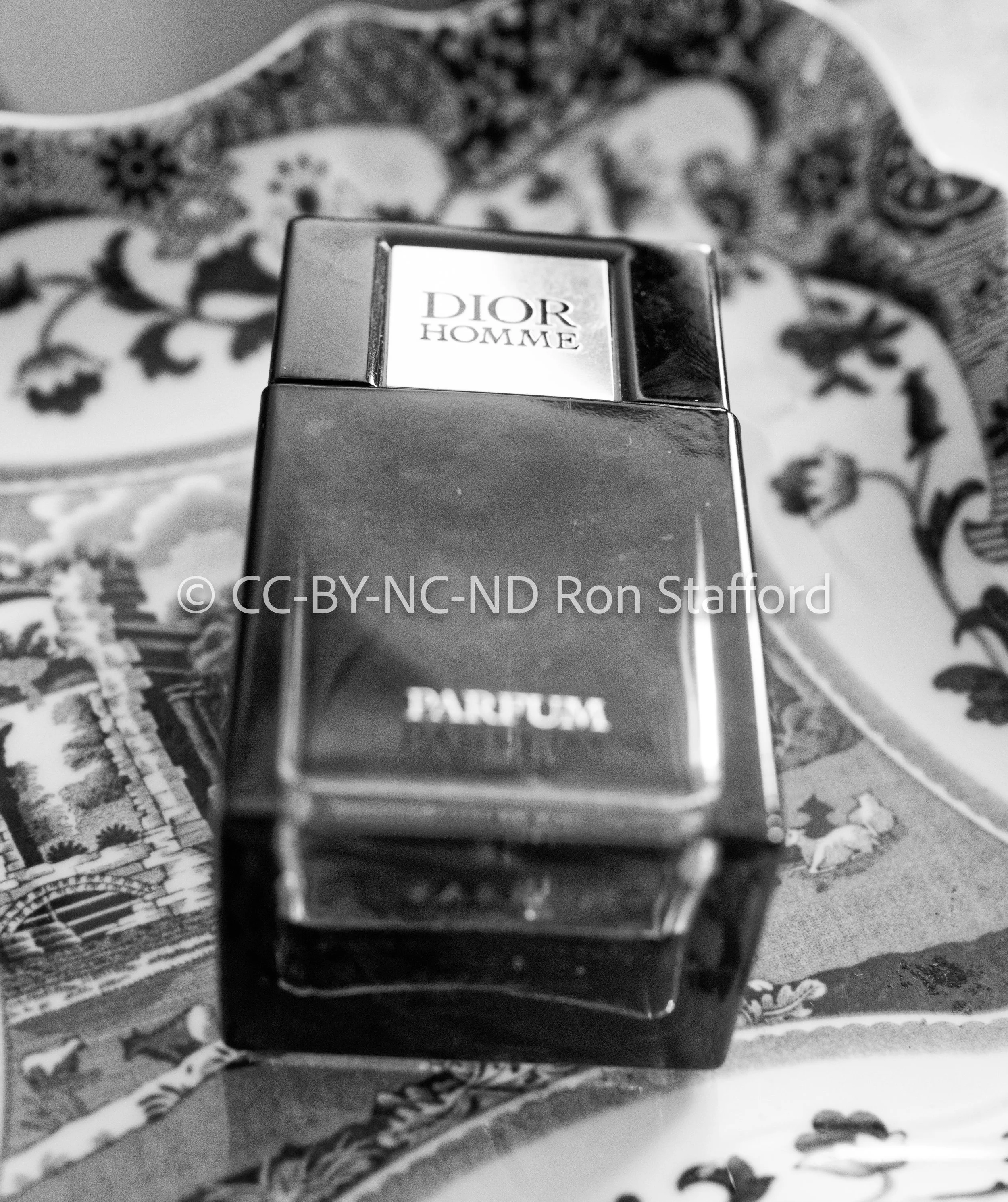
My Dior Homme, waiting like a small glass sacrament, holding the scent of confidence, memory, healing, and the man God has not allowed me to forget.
There are smells that do not simply remind us.
They resurrect.
They come creeping through the cracks of time like incense in an old church, like mildew in a forgotten parlor, like boxwood after rain, like hospital bleach in a room where someone has been trying very hard not to be afraid. A smell can open a door in the soul before the mind has even found the key. One breath, and there we are again, standing in some crystalline moment, surrounded by the ghosts of who we were, what we survived, and what we thought would never change.
Smell has always had that kind of power over me.
It is not a gentle faculty. It is not mannerly. It does not ask whether I am prepared for recollection. It simply arrives, carrying its little basket of memory like some severe Southern aunt who has come to tell the truth whether anyone asked for it or not.
A smell can take me back to something beautiful: Early Grey tea in the morning, old books, church wood, clean linen, rain on hot pavement, a cologne worn before stepping into the world with a mind full of purpose and a heart trying to be brave. But smell can also carry the darker sacraments of memory: sickness, loss, fear, waiting rooms, antiseptic, wound care, stale air, and the peculiar loneliness of being trapped in a room while life goes on outside the door.
Scholars have written about this strange power of scent. Odor can evoke autobiographical memory with unusual vividness and emotion, a phenomenon often associated with Proust and his famous madeleine (Chu & Downes, 2000). Herz (2016) notes that odor-evoked memories can feel especially intimate because they are often tied to emotion, place, and the body’s own archive of experience. Green et al. (2023) likewise explain that scent and taste can stir nostalgia in ways that feel deeply personal and self-defining.
Science, in its careful way, has confirmed what the wounded, the grieving, the nostalgic, and the prayerful have always known: the body remembers. The soul has a nose.
Lately, my smell profile has not been the refined catalog of a confident, intellectual man going forth into the world. It has not been leather, ink, polished shoes, old libraries, candle wax, coffee, or the clean, elegant note of my signature cologne.
It has been Dakin’s solution.
And let us not romanticize Dakin’s solution. It smells like bleach that went to nursing school and came back with authority. It is the smell of medical necessity. The smell of wound care. The smell of “we are doing what must be done.” It has filled my room with its stern little sermon, sharp and chemical, reminding me that healing is sometimes less like a sunrise and more like scrubbing the floor after a storm.
There have been other smells too: hospitals, bed pans, gauze, adhesive, stale air, the faint tired odor of being mostly bed bound. The kind of air that seems to settle when the windows have not been opened enough and the days have begun to resemble one another too closely. The smell of waiting. The smell of limitation. The smell of a life paused by a foot ulcer that did not ask permission before rearranging everything.
There is a Southern Gothic quality to illness that people do not talk about enough. It turns the bedroom into a chapel and a haunted house at the same time. The body becomes both beloved and suspicious. Every ache becomes a message. Every dressing change becomes a ritual. Every small improvement feels like a visitation of grace. You begin to measure hope in strange units: less drainage, better color, smaller measurements, cleaner edges, softer pain.
And in that room, with the bleach smell rising like a severe hymn, I have had to face the great spiritual humiliation of being still.
That may be one of the hardest things for a person like me.
I am, by temperament and vocation, a man of books, ideas, faith, culture, learning, work, and movement. I like to imagine myself as a confident intellectual gentleman with a purpose in the world, part librarian, part monk, part Georgian cleric accidentally dropped into the age of Walmart pickup and password resets. I believe in service. I believe in education. I believe in beauty. I believe in showing up.
And for a long season, my body said: you will show up here.
In this room.
In this bed.
With this wound.
With this smell.
There is a dark obedience in that.
The Carmelite tradition knows something about rooms, silence, darkness, and the slow purification of desire. St. John of the Cross wrote of the dark night, not as abandonment, but as the soul’s painful passage toward union with God. I do not pretend that a foot ulcer is a mystical poem, nor do I recommend Dakin’s solution as a devotional aid. But suffering has a way of stripping us down to the essential question: Who am I when I cannot perform the version of myself, I most recognize?
Who am I when I cannot go out?
Who am I when I cannot dress the way I want, move the way I want, work the way I want, serve the way I want, or wear the scent that reminds me of the man I still believe myself to be?
Before this season, my signature cologne was more than a fragrance. It was a declaration.
It reminded me of myself.
Not the diminished self. Not the medical self. Not the patient self with appointment times and bandages and blood sugar readings and gauze stacked like little white anxieties. It reminded me of the self who steps into the world with confidence. The self who carries books and purpose. The self who goes into libraries, churches, classrooms, museums, meetings, and conversations believing he has something meaningful to offer.
It smelled like the life I had built.
It smelled like intellect with manners.
It smelled like vocation.
It smelled like a man who still planned to do great things for the world.
And then, for a while, I could not bear to wear it.
That may sound vain to someone who has never had illness pause the music of his life. But it was not vanity. It was grief.
The cologne reminded me of what had been interrupted. It reminded me of the rooms I was not entering, the conversations I was not having, the work I was not doing, the life waiting somewhere beyond the wound dressings and stale air. It smelled too much like the man I feared I had misplaced.
Sometimes beauty hurts because it remembers us before we are ready to remember ourselves.
The Bible tells us, “For everything there is a season, and a time for every matter under heaven” (Ecclesiastes 3:1, New Revised Standard Version Updated Edition, 2021). That passage is often read as wisdom about life’s great changes, but lately it has felt less like poetry and more like a calendar written by God in invisible ink.
There is a time to weep.
There is a time to laugh.
There is a time to break down.
There is a time to build up.
There is “a time to heal” (Ecclesiastes 3:3, NRSVue, 2021).
A time to heal.
Not a glamorous time. Not a picturesque time. Not a time that photographs well. Healing is rarely as elegant as we want it to be. It is not all lilies and golden light. Sometimes healing smells like bleach. Sometimes it comes wrapped in gauze. Sometimes it arrives through the hands of nurses, surgeons, caregivers, and the blessed soul who knows where the tape is. Sometimes healing is so slow that you wonder whether it is happening at all.
But then something changes.
A wound looks better.
Pain decreases.
The room seems less like a sentence.
The air shifts.
Hope, that stubborn theological weed, pushes up through the cracked pavement.
And one day, you look at the cologne bottle again.
There it sits, like a relic of a former life and a prophecy of a future one. The bottle has been waiting with the patience of a little glass monk. It has not scolded. It has not rushed me. It has simply remained there, holding its fragrance, keeping vigil.
Recently, as I have begun to see improvement and healing, I have found that I can wear it again.
Carefully.
Reverently.
Almost like lighting a candle.
To put it on again is not merely grooming. It is devotional. It is a small act of resurrection. It is the body saying, “I am still here.” It is the soul saying, “I have not disappeared.” It is the wounded man remembering that he is also a whole man, a thinking man, a praying man, a man with work still to do and beauty still to carry.
In Hamlet, Ophelia says, “There’s rosemary, that’s for remembrance” (Shakespeare, 1603/2024, 4.5.3098). Rosemary has long carried associations with memory, mourning, fidelity, and the keeping of what must not be forgotten. In that tragic little bouquet of hers, rosemary becomes more than an herb. It becomes a fragrant command: remember.
I understand that differently now.
Rosemary is for remembrance.
But so is bleach.
So is hospital air.
So is stale linen.
So is cologne.
Each scent has carried a piece of me through this season. The Dakin’s solution has held the discipline of wound care. The hospital smells have held fear, endurance, and the strange courage required to keep showing up. The stale air has held the long days of confinement. But the flowers I smell as I go back and forth to treatments have carried something gentler: the memory of St. David’s, of my church family, of prayers being offered when I am too tired to form the words myself. Their fragrance reminds me that I have not been healing alone. And my cologne, waiting patiently for its return, has held the man I feared I had lost and the man God, in mercy, has not allowed me to forge
Perhaps this is what healing really means, not erasing the hard smells, not pretending the room was never stale, not denying the bleach, the bed pans, the wound, the fear, the helplessness. Healing means that those smells do not get to become the whole story.
They become chapters.
They become stations.
They become, in their own severe way, witnesses.
The final word will not be Dakin’s solution.
The final word will not be the stale air of confinement.
The final word will not be the hospital corridor, the bed pan, the gauze, or the fear that whispered too loudly in the night.
The final word belongs to God, who makes all things new, though often with maddening slowness and very little regard for my preferred schedule.
The final word may smell like morning coffee.
It may smell like old books.
It may smell like church wood and candle wax.
It may smell like rain on Southern dirt.
It may smell like clean clothes, fresh air, and my signature cologne rising again from the pulse points like a prayer I had almost forgotten how to say.
There is a time to be still.
There is a time to endure.
There is a time to remember.
There is a time to heal.
And there is, thank God, a time to put the cologne back on, not because the suffering never happened, but because it did not win.
References
Chu, S., & Downes, J. J. (2000). Odour-evoked autobiographical memories: Psychological investigations of Proustian phenomena. Chemical Senses, 25(1), 111–116. https://doi.org/10.1093/chemse/25.1.111
Green, J. D., Reid, C. A., Kneuer, M. A., & Melia, T. J. (2023). The Proust effect: Scents, food, and nostalgia. Current Opinion in Psychology, 50, Article 101562. https://doi.org/10.1016/j.copsyc.2023.101562
Herz, R. S. (2016). The role of odor-evoked memory in psychological and physiological health. Brain Sciences, 6(3), Article 22. https://doi.org/10.3390/brainsci6030022
New Revised Standard Version Updated Edition Bible. (2021). National Council of Churches. https://www.biblegateway.com/versions/New-Revised-Standard-Version-Updated-Edition-NRSVue-Bible/
Shakespeare, W. (2024). Hamlet (Folger Shakespeare Library). https://www.folger.edu/explore/shakespeares-works/hamlet/
(Original work published ca. 1603)