Salt in the Wound:The Terror, Mesalt, Dakin’s Solution, and the Strange Mercy of Healing
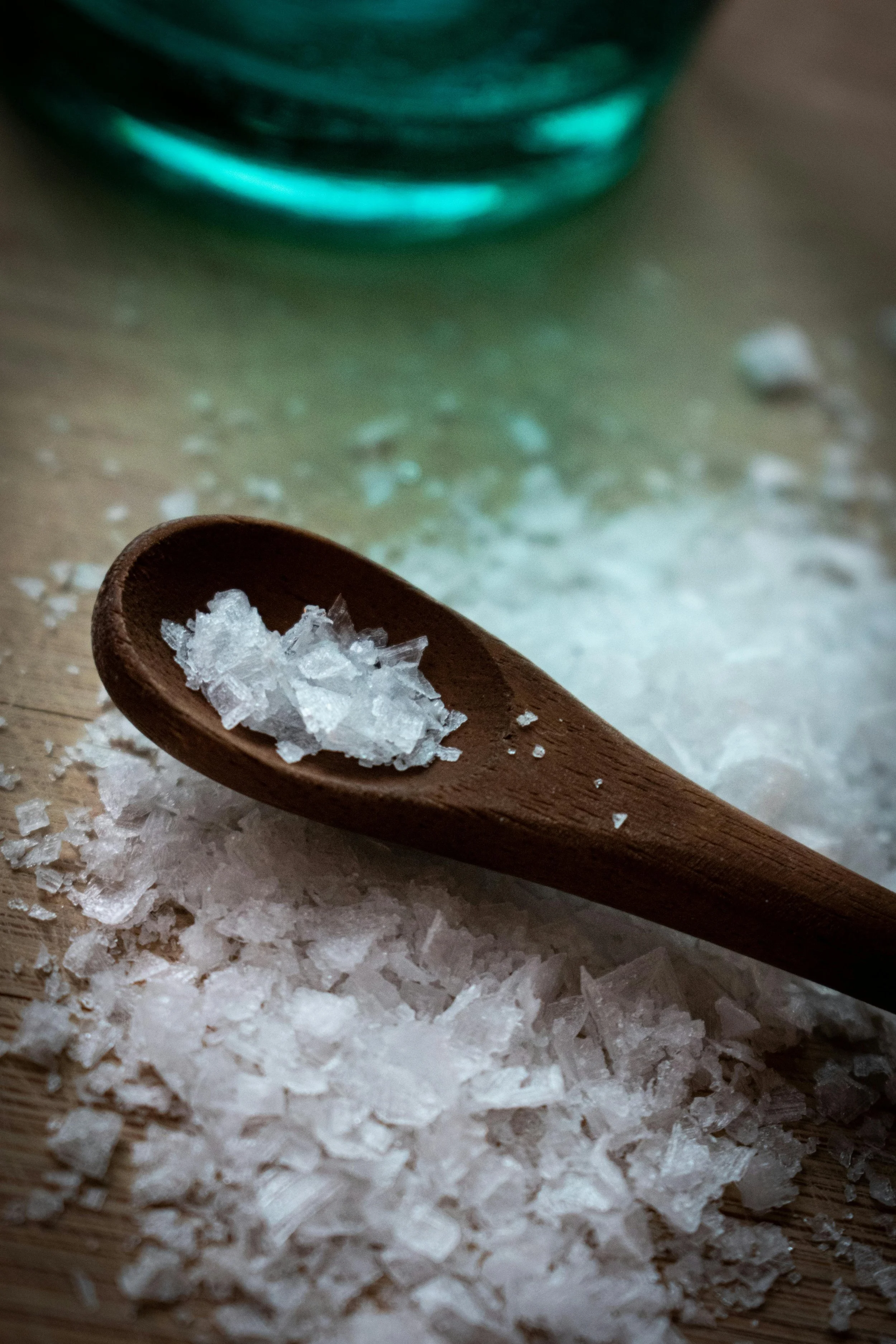
Salt may look simple, but it has always carried meaning, cleansing, preservation, healing, and faith. In my wound care journey, this image reminds me that even ordinary things can become instruments of grace when God uses them to help draw out what does not belong and make room for healing.
I have been watching The Terror, and one scene stayed with me. The ship’s doctor packs a wound with salt. It is a hard scene to watch, partly because it feels brutal, and partly because it feels strangely familiar.
There I was, watching a fictionalized nineteenth-century Arctic expedition, seeing a doctor use salt in a wound, while I am sitting in my own real life using modern wound care products like Mesalt and Dakin’s solution. The scene made me stop and think: maybe medicine changes, but some of the basic truths of healing do not.
The Terror is historical fiction, based on the lost Franklin expedition, which sailed from England in 1845 and disappeared while searching for the Northwest Passage. The expedition belonged to the Victorian era, a time before antibiotics, modern imaging, wound vacs, and the kind of advanced wound care we have now. In that world, a ship’s surgeon had limited tools, limited supplies, and no easy rescue. Infection was not an inconvenience. It was a threat to life. A wound could become a death sentence.
Historically, salt and salted gauze have been used in wound care because salt can help draw fluid from tissue and support cleansing. One wound care history notes that from 1909 to 1918, before and during World War I, it was common to apply dry gauze packed with salt to the wound bed. Later, the Carrel-Dakin method became common in the British Army, using hypochlorite solution with gauze packed into wounds (WoundSource, 2021). That is not exactly the same as the Victorian Arctic world of The Terror, but it shows the same medical logic: when doctors did not have antibiotics, they often relied on packing, drainage, cleansing, and whatever substances could help control infection and remove what did not belong.
That historical connection matters to me because both Mesalt and Dakin’s solution are part of my wound care now. Mesalt is a sodium chloride dressing used for draining wounds. It helps absorb wound fluid and supports the cleansing of the wound bed (Mölnlycke Health Care, 2026). Dakin’s solution is a diluted sodium hypochlorite solution used in some wound care settings to help cleanse wounds and reduce bacteria (WoundSource, 2021). They are different products, but they share a basic purpose: helping the wound become cleaner so healing has a better chance.
That is what struck me. The ship doctor in The Terror was not trying to be cruel. He was trying to save a life with the tools he had. Salt in the wound sounds like punishment, but in wound care, it can also be a form of treatment.
That is the part I keep coming back to: some things never change.
A ship’s doctor in a Victorian story packs a wound with salt.
Military medicine later uses salted gauze and antiseptic solutions in wound beds.
My wound care team uses Mesalt and Dakin’s solution.
The materials are more controlled now. The science is better. The dressing is sterile, measured, and designed for a specific purpose. The solution comes with instructions, concentrations, and clinical judgment behind it. But the principle remains recognizable: cleanse the wound, draw out what does not belong, preserve what is still living, and make room for healing.
And that is where my mind goes to Scripture.
Jesus said, “You are the salt of the earth” (Matthew 5:13, New Revised Standard Version Updated Edition, 2021). I have heard that verse my whole life, usually as a call to be good, humble, useful, and faithful. But wound care has made me hear it differently. Salt is not merely seasoning. Salt is not only flavor. Salt can also preserve what is living and help draw out what is corrupting.
That is not a comfortable image, but it is a holy one.
Jesus also said, “Have salt in yourselves, and be at peace with one another” (Mark 9:50, New Revised Standard Version Updated Edition, 2021). I used to think of that verse spiritually, almost abstractly. Now I think about it physically. Salt can sting. Salt can burn. Cleansing can feel harsh. But sometimes that sting is part of the healing.
Maybe grace works the same way.
Grace is not always soft. Sometimes grace exposes the wound. Sometimes grace draws out fear, pride, despair, anger, shame, and all the dead things we try to keep hidden. Sometimes God’s healing feels like salt. Sometimes it feels like cleansing solution on tender flesh. It reaches the places we would rather cover up and leave alone. But God does not heal by pretending the wound is not there. God heals by entering it.
That is hard for me to write because I am still in the middle of it. I am not looking back from the safe distance of complete recovery. I am still dealing with dressings, drainage, Dakin’s solution, Mesalt, fear, appointments, and the daily discipline of trying not to make things worse. I know what it means to look at a wound and wonder if it is really getting better. I know what it means to be tired of being brave.
But watching The Terror reminded me that healing has always required courage from the wounded. Sailors and soldiers had to endure the treatment because the alternative was infection, decay, and death. I have to endure my own treatment because the goal is not comfort. The goal is healing.
There is a lesson in that.
Sometimes the thing that hurts is not the thing destroying you. Sometimes the thing that hurts is the thing helping to save you.
That is what Mesalt and Dakin’s solution represent to me right now. They are modern medicine, yes. But they are also old symbols. Salt in the wound. Cleansing in the wound. Salt of the earth. The body being drawn back from infection and decay. The soul being drawn back toward grace.
I do not believe God causes every wound. But I do believe God can work through the wound. I believe God can take even this, the fear, the pain, the dressing changes, the uncertainty, and use it to teach me something about endurance, humility, and grace.
Some things never change.
Wounds still need cleansing.
Bodies still need tending.
Souls still need grace.
And God still uses ordinary things, salt, water, bread, wine, oil, to reveal extraordinary mercy.
References
Mölnlycke Health Care. (2026). Mesalt. https://www.molnlycke.com/en-us/products/wound-care/wound-bed-preparation/mesalt/
National Council of Churches. (2021). New Revised Standard Version Updated Edition Bible. Friendship Press.
Pexels. (n.d.). Salt on a wooden spoon [Photograph]. https://www.pexels.com/photo/salt-on-a-wooden-spoon-4475232/
WoundSource. (2021, November 4). Wound care then and now: A brief history of the evolution of wound care. https://www.woundsource.com/blog/wound-care-then-and-now-brief-history-evolution-wound-care