I Will Buy the Flowers Myself
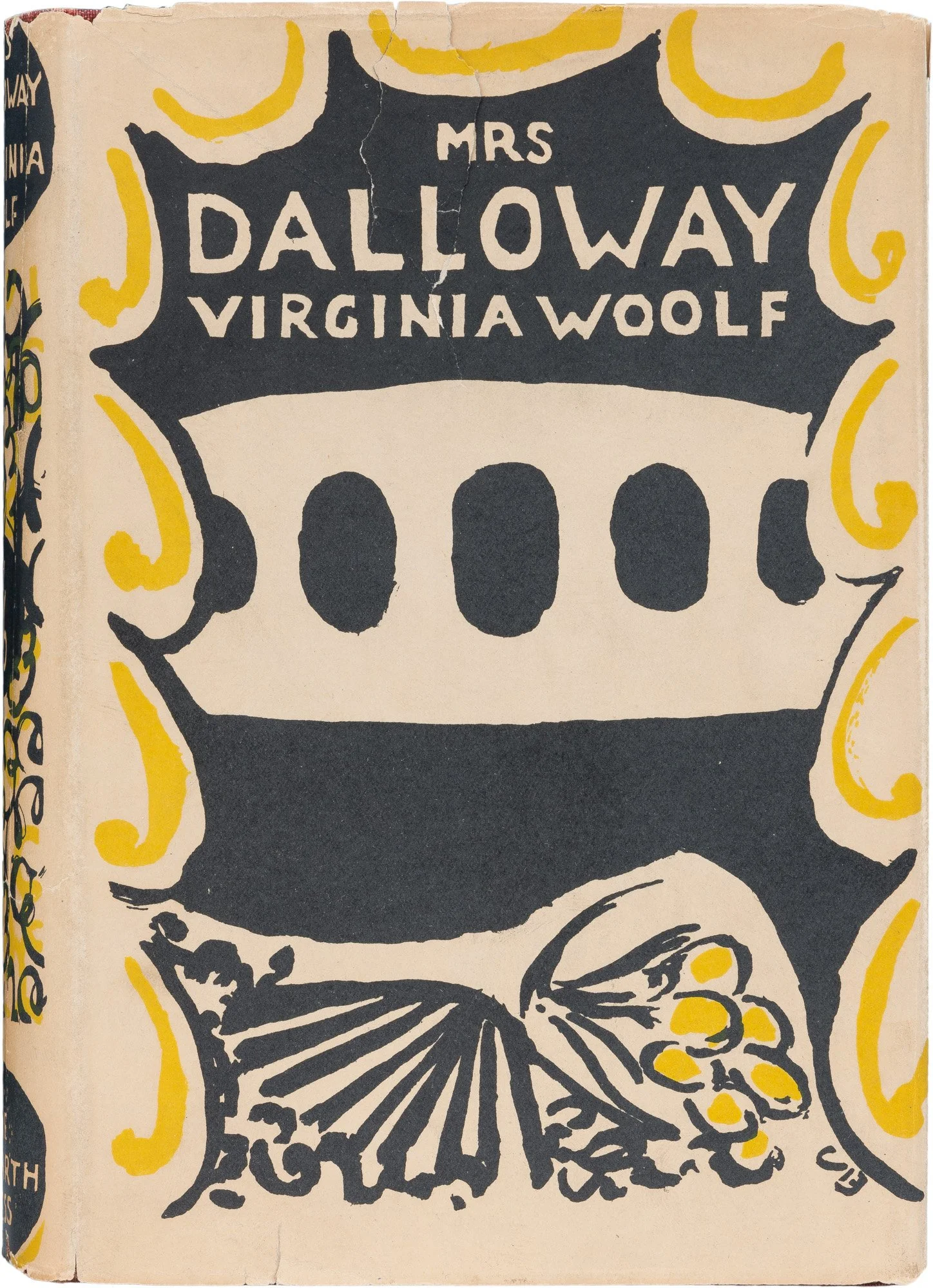
Mrs. Dalloway cover
First-edition cover of Virginia Woolf’s Mrs. Dalloway, published in 1925, with cover art by Vanessa Bell. Like the novel itself, the image reflects the artistic world of modernism, where beauty, interior life, memory, and social performance meet on the page (Bell, 1925).
“Considering how common illness is, how tremendous the spiritual change that it brings…” Virginia Woolf writes in On Being Ill (Woolf, 1930/1947). That sentence stops me because Woolf understood something people still struggle to name. Illness is not only physical. It does not simply happen to the body and leave the rest of the self untouched. Illness enters the mind, the memory, the spirit, the imagination, and the way a person understands time. It changes how the world feels. It changes how ordinary things look. It changes how a person sees themselves.
That is part of what makes Virginia Woolf so powerful to me. As a modernist writer, she was not satisfied with telling stories only through plot, action, and neat conclusions. Modernism pushed literature inward. It explored the depth and breadth of human life, the hidden movement of thought, the ache beneath ordinary conversation, the memories that interrupt the present, and the quiet fears people carry while still going through the motions of daily life. Woolf knew that life is not always experienced in straight lines. Sometimes life comes in fragments, sensations, memories, wounds, doubts, flashes of beauty, and sudden grief.
That is why I admire Woolf so deeply, especially Mrs. Dalloway (Woolf, 1925). On the surface, Clarissa Dalloway is preparing for a party. She is buying flowers, moving through London, remembering the past, thinking about the people she has loved, and performing the social role expected of her. But underneath that simple day is an entire inner world. Clarissa is not merely planning an event. She is measuring her life. She is thinking about age, love, loss, survival, class, duty, beauty, and death. Woolf turns one day into a whole life.
I understand that more now than I once did.
Like Clarissa Dalloway, I know what it means to keep moving through the world while carrying a private interior life that others may never fully see. I know what it means to appear composed while inwardly wrestling with pain, memory, fear, healing, and the question of what life is supposed to become after suffering has changed it. I know what it means to feel the weight of what has been lost and still notice beauty. A flower. A room. A shaft of light. A church window. A piece of music. A sentence that says what my heart could not.
Clarissa’s famous opening, “Mrs. Dalloway said she would buy the flowers herself,” has always felt simple and profound at the same time (Woolf, 1925). It is a sentence about flowers, yes, but it is also a sentence about agency. About choosing beauty. About stepping into the world. About doing one small thing oneself, even when life has become complicated, wounded, or uncertain.
That is where I find myself now. Illness has changed me. Recovery has changed me. Grief has changed me. Faith has changed me. Like Woolf understood, sickness brings a spiritual change. It strips life down. It makes the ordinary feel sacred. It forces questions I might have avoided before. Who am I now? What still matters? What beauty can I still choose? What part of my life can I still claim?
And maybe that is why Woolf stays with me. She reminds me that the inner life matters. That suffering has language. That beauty can survive beside pain. That even a wounded life is still a life of thought, feeling, dignity, and meaning.
So, like Clarissa, I will step into the day. I will choose beauty where I can find it. I will claim what is still mine.
I will buy the flowers — myself.
References
Bell, V. (1925). Mrs. Dalloway cover [Book cover]. Wikipedia. https://en.wikipedia.org/wiki/File:Mrs._Dalloway_cover.jpg
Beresford, G. C. (1902). George Charles Beresford: Virginia Woolf in 1902 — restoration [Photograph]. Wikipedia. https://en.wikipedia.org/wiki/File:George_Charles_Beresford_-Virginia_Woolf_in_1902-_Restoration.jpg
Woolf, V. (1925). Mrs. Dalloway. Hogarth Press.
Woolf, V. (1947). On being ill. In The moment and other essays. Hogarth Press. Original work published 1930.

Virginia Woolf, photographed by George Charles Beresford in 1902. This image captures Woolf as a young woman, long before her modernist fiction would reshape how readers understood memory, illness, consciousness, and the inner life(Beresford, 1902).