The Boat Is Turning
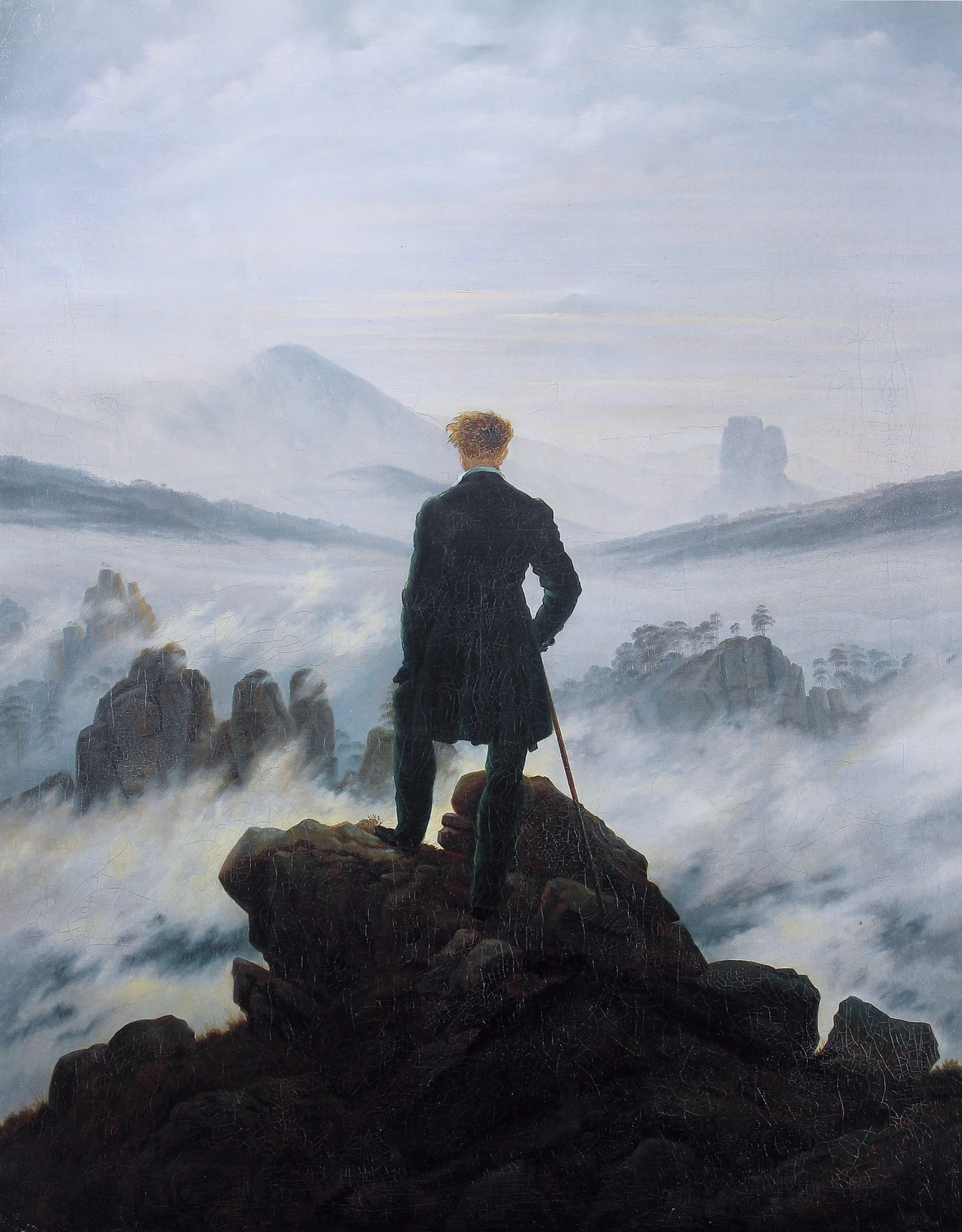
Standing above the fog, I am reminded that we do not have to see the whole landscape to trust the One who holds the rudder. Since March, I have lived in the mist of survival, but slowly, by grace, the boat is turning toward life again.
Caspar David Friedrich, Wanderer above the Sea of Fog
Since March, I have been living in survival mode.
Not the charming, literary kind of survival where one stands handsomely on a mountain in a black coat like Caspar David Friedrich’s Wanderer above the Sea of Fog, although, let us be honest, I have always appreciated a man who knows how to pose dramatically before the abyss.
I mean the real kind of survival: doctors, wound care, dressings, blood sugar numbers, antibiotics, fear, waiting, praying, and trying not to let one difficult day convince me that all the progress was an illusion.
Friedrich’s wanderer stands above the fog, looking out over a world he cannot fully see. That image has stayed with me because it feels very much like this season of my life. Since March, I have been standing at the edge of my own fog. I could see pieces of the landscape, appointments, procedures, healing, setbacks, but not the whole road. Certainly not the ending.
And in that fog, I have had to learn something I do not naturally enjoy learning: I am not always meant to steer.
I may read the map. I may study the weather. I may offer several informed opinions about the quality of the boat, the condition of the sails, and the questionable competence of the crew. But the rudder belongs to God.
That has been the lesson.
Let God steer.
Sylvia Plath understood something about the strange country between suffering and rebirth. In “Tulips,” she writes from the world of the hospital room, where the body is exposed, vulnerable, and almost emptied of ordinary life (Plath, 1965). I understand that feeling now: the odd suspension between illness and healing, between fear and beauty, between wanting only quiet and being startled by the bright insistence that life is still waiting.
But lately, as my wound heals, I have begun to feel something changing.
It is not dramatic. There has been no thunderclap from heaven, no cinematic music, no angel descending with pristine Kerlix and a medically approved clipboard. It has been quieter than that. A little more strength. A little less fear. A moment when I realize I am not merely surviving the day, I am beginning to live inside it again.
That is grace.
Psalm 46 says, “Be still, and know that I am God” (New Revised Standard Version Updated Edition, 2021, Ps. 46:10). I used to think stillness meant peace. Now I know stillness can also mean surrender. It can mean standing above the fog, unable to see the whole landscape, and trusting that God sees what I cannot.
Isaiah gives the promise plainly: “When you pass through the waters, I will be with you” (New Revised Standard Version Updated Edition, 2021, Isa. 43:2). Not if. When. The waters come. The fog comes. The long nights come. The uncertain mornings come. But so does God.
And slowly, almost without my noticing it, survival becomes something else.
It becomes gratitude.
It becomes breath.
It becomes healing.
It becomes the quiet miracle of realizing that God has not only kept me alive, He has stayed close enough to teach me how to live again.
Like Friedrich’s wanderer, I am still looking out over fog. I do not know every valley, every rock, every turn ahead. Healing is not a straight line, and I have learned not to trust any theology that sounds too polished, too easy, or too cheerful.
But I do know this: God has had my back. God has watched over me. God has held the rudder when my hands were too tired to steer.
And for the first time in a long while, I can feel it.
The boat is turning.
References
Friedrich, C. D. (1818). Wanderer above the sea of fog [Oil on canvas]. Hamburger Kunsthalle. https://en.wikipedia.org/wiki/File:Caspar_David_Friedrich_-_Wanderer_above_the_sea_of_fog.jpg
New Revised Standard Version Updated Edition Bible. (2021). National Council of Churches.
Plath, S. (1965). Ariel. Faber and Faber.