Art as the Doorway Back to Myself
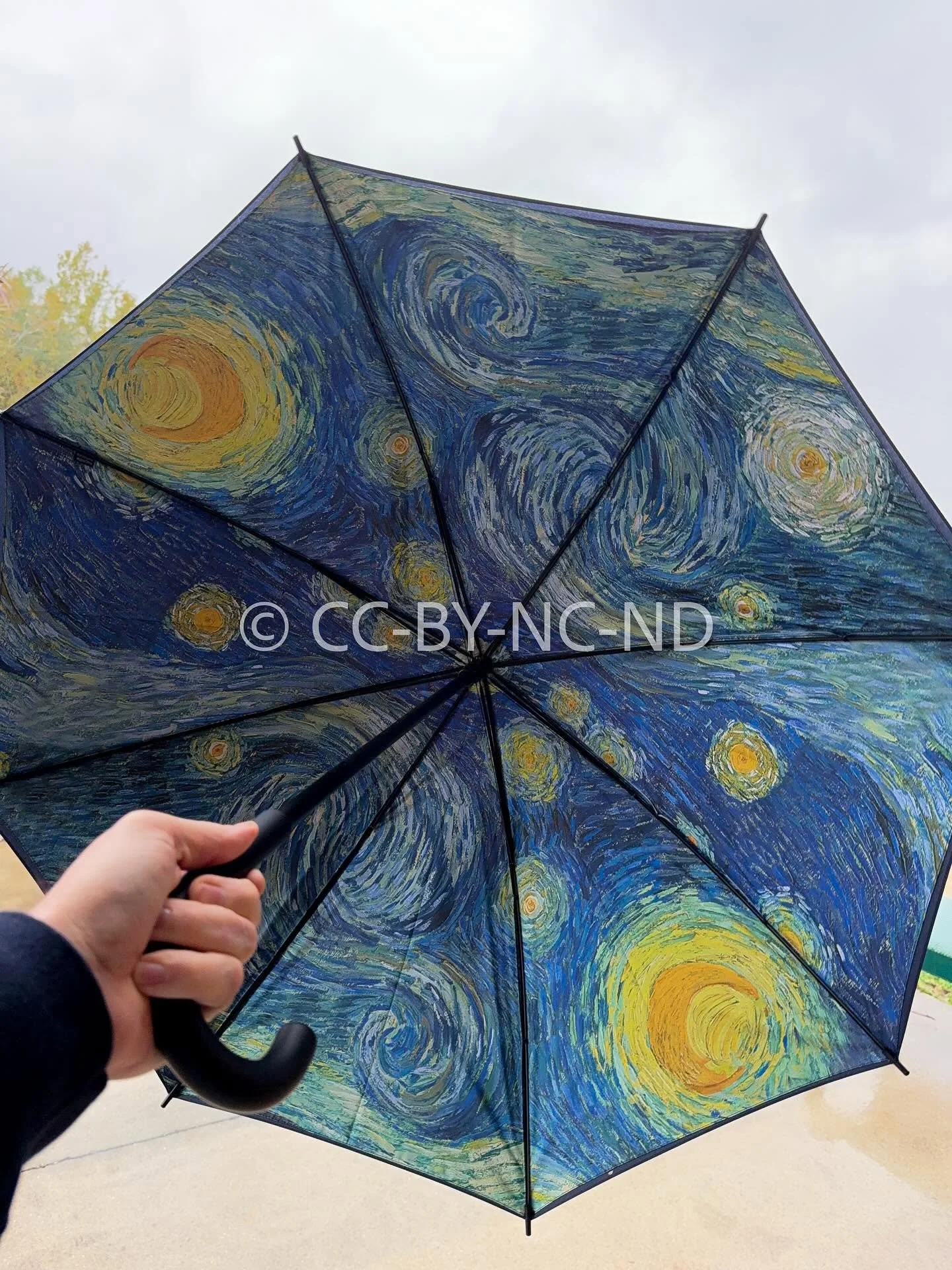
Even on the grayest days, I carry a little Starry Night above me. Art has always been my umbrella against the weather of the mind—not because it keeps the rain from falling, but because it gives the storm color, movement, and meaning. Like David’s psalms, it lets the deep places speak to the deep places. Under this swirling sky, I am reminded that art is not escape; it is the way I find my way back to myself.
Art has never been, for me, merely something pretty hung on a wall so a room can look as if it has behaved itself. Art is not decoration. It is not a polite accessory. It is not something added at the end, like parsley on a plate or a committee-approved mission statement. Art is, for me, one of the few honest doors into the inner life.
I do not mean that art is my religion. It is not exactly a spiritual practice either, at least not in the formal sense. I do not stand before a painting as though it were an altar, nor do I expect a museum label to function as a minor prophet, though some of them have certainly tried. Art is not worship for me. It is not a replacement for prayer, doctrine, church, or faith. It is something more intimate and more human: a way of finding my way back to myself.
There are times when my own mind becomes a rather crowded parlor, too many voices, too many anxieties, too many memories moving the furniture around without permission. Art gives me a way to step outside that noise without abandoning myself. It lets me move beyond the narrowness of my own thoughts and reach toward something higher, not necessarily in a religious sense, but in a human one. Something deeper. Something truer. Something less concerned with the ordinary foolishness of the day.
Paul Tillich wrote about religion as “ultimate concern,” but what I find useful in Tillich is not simply his theology. It is his insistence that culture, art, and human creativity reveal the depth of human existence (Tillich, 1959). Art can carry meaning before we have words for it. It can show us what the soul is carrying before the soul is ready to give a formal report. In that sense, art becomes a kind of interior weather map. It does not solve the storm, but it lets me see the clouds.
Psychology has its own way of naming this. Carl Jung understood symbols, images, and myths as expressions of the unconscious life within us (Jung, 1964). That matters because art often reaches the part of us that regular language cannot quite manage. A painting, a photograph, a piece of music, or a poem can touch something buried beneath explanation. It can reveal grief, longing, desire, memory, fear, and hope before those things have lined up neatly and introduced themselves.
This is why art feels so necessary to me. It is not a hobby in the shallow sense. It is not a pastime. It is a form of inner excavation. Art gives shape to what is otherwise formless. It lets me see what I have been carrying around in the dark, usually while pretending I am doing just fine, thank you very much.
Rollo May argued that creativity requires courage because it asks us to encounter reality rather than flee from it (May, 1975). I understand that deeply. The creative life is not all sweetness and watercolor paper. It is confrontation. It asks us to look at what hurts, what haunts, what delights, and what refuses to be buried. Art does not remove suffering from life. It gives suffering a frame, a color, a line, a sound, a sentence. It allows the broken places to speak without becoming the whole story.
That is where I think of David.
David was shepherd, king, warrior, sinner, poet, musician, and, quite frankly, a man whose inner life had more dramatic weather than the South Carolina sky in August. Yet David did not hide the contradictions of his soul. The Psalms are not tidy little inspirational plaques. They are cries, songs, confessions, complaints, praises, laments, and moments of breathtaking beauty. David brings the whole self before God: the noble parts, the frightened parts, the guilty parts, the joyful parts, and the parts that probably should have been supervised by a wise aunt.
Psalm 139 begins with the language of being searched and known: “O Lord, you have searched me and known me” (Psalm 139:1, New Revised Standard Version Updated Edition). That is one of the great longings of the human heart: to be known fully and not discarded. Art, in its own way, performs a similar movement. It searches us. It finds the hidden rooms. It notices what we thought we had successfully disguised as “storage.”
Later in that same psalm, David prays, “Search me, O God, and know my heart” (Psalm 139:23). That line has always struck me as both brave and dangerous. To be searched is not always comfortable. To be known is not always flattering. But art has a way of doing that. It slips past the well-dressed version of ourselves and finds the real one sitting in the corner, holding all the unsaid things.
Psalm 42 gives us another phrase that feels close to the experience of art: “Deep calls to deep” (Psalm 42:7). That is exactly what happens when a painting, a photograph, an aria, or a poem arrests me. Something deep in the work calls to something deep in me. It is not always religious. It is not always spiritual. But it is real. It is the recognition that the human soul has depths that ordinary conversation cannot always reach.
And then there is David with his harp. Before David becomes king, before the crown and the catastrophe, he is brought to Saul because his music can soothe a troubled spirit (1 Samuel 16:14–23). I love that image. David enters a room of distress and brings art. He does not bring a policy memo. He does not bring a strategic plan. He brings music. The music does not erase Saul’s torment, but it offers relief. It creates space. It makes suffering breathable for a moment.
That is what art has done for me again and again. It has made life breathable.
Art connects me to the core of my being. Not the public version. Not the professional biography version. Not the LinkedIn version, polished to within an inch of its life. I mean the actual core—the place where memory, beauty, pain, humor, longing, faith, doubt, and stubborn hope all sit together like strange relatives at Thanksgiving.
It also helps me move beyond myself. That may sound like a contradiction, but I do not think it is. The deeper I go into art, the less trapped I feel inside my own mind. Art opens the window. It reminds me that my pain is not the only pain, my joy is not the only joy, and my questions are part of a much older human conversation. The artist, the psalmist, the theologian, the psychologist, and the wounded human being are all, in their own ways, asking: What does it mean to be alive inside this fragile, beautiful, maddening world?
For me, art is where that question becomes visible.
It is where the invisible gets a body.
It is where the soul, tired of being sensible, finally tells the truth.
And sometimes, standing before a painting or listening to music or taking a photograph, I do not find an answer. I find something better. I find a way back into the deepest part of myself, and from there, a way outward again.
That is the strange mercy of art. It does not rescue me from being human.
It helps me become more fully human.
References
Jung, C. G. (1964). Man and his symbols. Doubleday.
May, R. (1975). The courage to create. W. W. Norton.
The Holy Bible, New Revised Standard Version Updated Edition. (2021). National Council of Churches.
Tillich, P. (1959). Theology of culture. Oxford University Press.