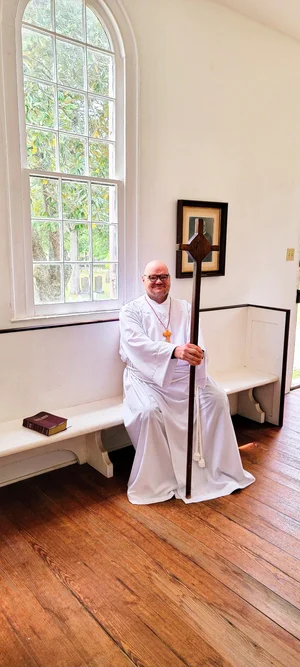
Meeting Toulouse-Lautrec in Washington: Beauty in the Broken Places
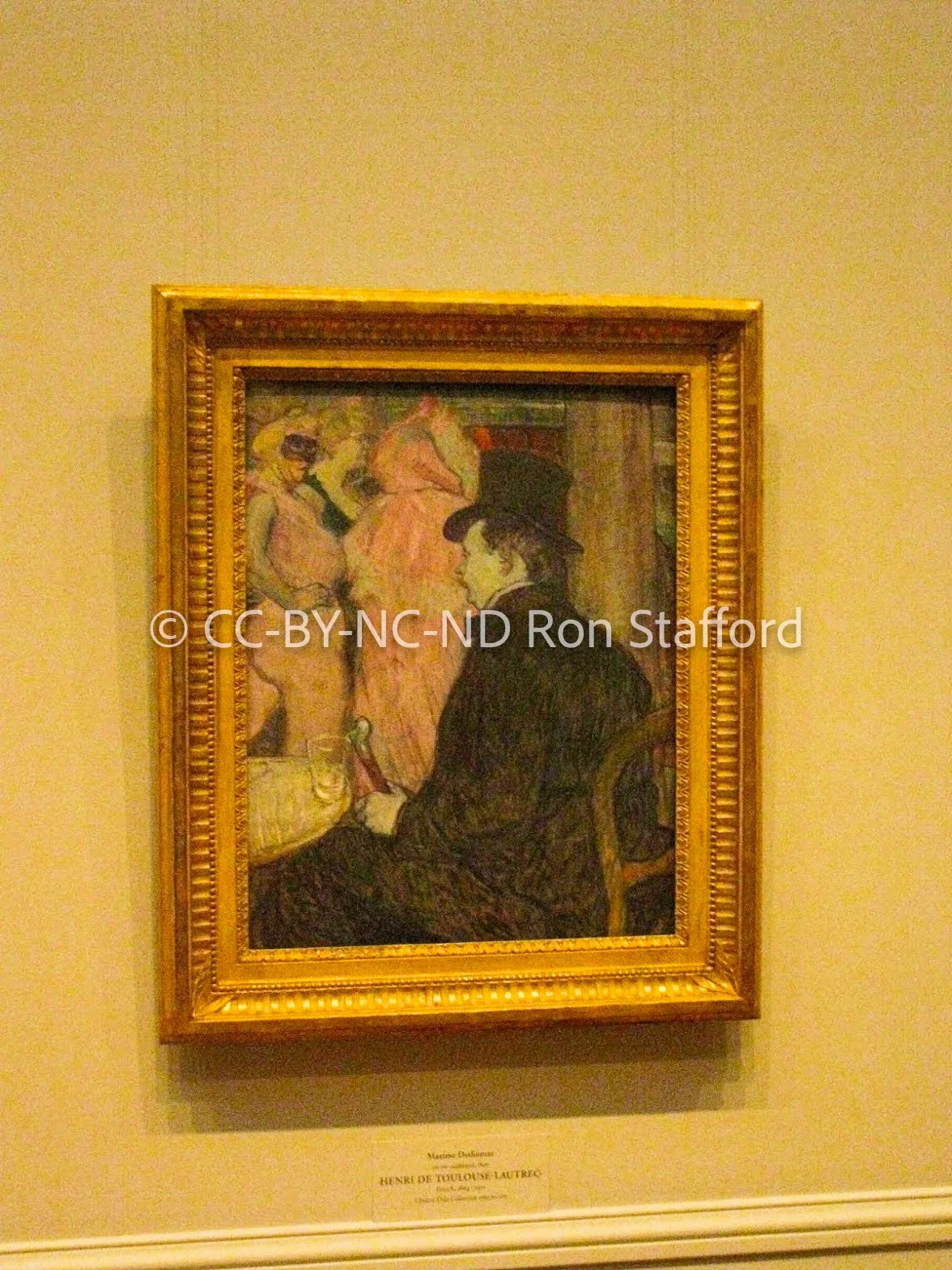
Toulouse-Lautrec understood that beauty does not always enter through the front door. Sometimes it sits at a café table, half-lit and weary, wearing a black hat and watching the world perform itself. In his work, brokenness is not hidden; it is transformed into line, color, humor, and mercy.
I did not expect to meet Henri de Toulouse-Lautrec in Washington, D.C.
Of course, he was not standing there in the National Gallery with his cane, his sharp eyes, and that unmistakable air of aristocratic mischief. He was not leaning against a wall with the look of a man who had seen too much, laughed at most of it, and decided to draw the rest before anyone could pretend it was respectable. He was not tucked into a corner of Montmartre, sketchbook in hand, watching dancers, singers, working women, aristocrats, drinkers, dreamers, and night-blooming souls’ whirl past him in feathers, lamplight, perfume, and exhaustion.
But there he was.
Not in body, but in line, color, movement, and presence. Toulouse-Lautrec has a way of showing up through his art as if he has just stepped out for a cigarette and will return in a moment to make one more devastatingly accurate observation. His figures do not merely sit on paper. They lean, ache, laugh, perform, endure. They carry the weight of being seen and unseen at the same time.
Standing before his work, I felt something I do not always feel in a gallery: recognition.
Not the simple recognition of liking an artist. I have liked many artists. I have admired their brushwork, their composition, their nerve, their holy lack of good manners. But with Toulouse-Lautrec, I felt something closer to kinship. He and I are not the same, of course. He was a French aristocrat of the Belle Époque; I am a Southern librarian-archivist-theologian-at-large who has spent more time with gauze, wound care, and institutional paperwork than any man should reasonably endure. He haunted the Moulin Rouge. I haunt church sanctuaries, libraries, museums, and the occasional medical waiting room.
Still, I knew him.
There is something in Toulouse-Lautrec’s face, in his art, and in the world, he chose to observe that feels deeply familiar to me. It is that aristocratic mischief: not snobbery, not cruelty, but a refusal to let the world have the final word. It is the look of someone who knows the rules of polite society and has decided, quite sensibly, that many of them are ridiculous. It is the ability to stand in the parlor, notice the cracked plaster, the family secrets, the too-sweet tea, the portrait hanging slightly crooked, and understand that the truth is usually sitting in the corner wearing too much rouge.
That, I suppose, is where my Southern Gothic soul recognized him.
My worldview has always leaned Southern Gothic, not because I enjoy gloom for its own sake, but because I trust any vision of the world that admits beauty and decay often occupy the same pew. The South teaches you that roses grow beside graveyards, that old houses remember things, that manners can hide cruelty, that faith can be both balm and burden, and that every family story has at least one locked room nobody discusses until after dessert.
Toulouse-Lautrec understood that kind of world, even if his geography was Paris instead of the rural South. His Montmartre was not my churchyard, my archive, or my collapsing Southern landscape of memory and magnolia, but the spiritual weather was similar. He painted a world where glamour and sadness sat elbow to elbow. He saw the performance and the wound beneath it. He understood that people often dress up their despair before taking it out in public.
That is Southern Gothic to the bone.
It is also deeply human.
Toulouse-Lautrec knew what it meant to live in a body that did not cooperate with the world’s expectations. As a boy, he broke both legs, and because of an underlying condition, they did not heal in the ordinary way. His torso developed, but his legs remained shortened. He moved through the world visibly marked by difference. People mocked him. They reduced him to his body. They mistook his physical form for the whole of his identity, which is one of humanity’s oldest and laziest sins.
And yet, he made art.
That is the part that stopped me.
He made art anyway.
He made art from the edge of things. He painted the performers, the dancers, the women, the workers, the drinkers, the outcasts, and the people polite society enjoyed looking at but not always knowing. He did not paint the world as if everyone had been freshly laundered and spiritually pressed. He painted the human condition with its rouge slightly smeared, its stocking slipping, its laughter too loud, its loneliness still sitting at the table after midnight.
That is not decadence. That is honesty.
And honesty, when handled by an artist, can become mercy.
I have been thinking a great deal lately about brokenness. Not as a sentimental word stitched onto a throw pillow, but as a physical reality. Broken skin. Broken plans. Broken schedules. Broken confidence. Broken assumptions about what the body can do. Broken illusions that healing is neat, linear, and obedient.
It is not.
Healing is often a very poor administrator. It misses deadlines. It changes instructions. It requires supplies, patience, transportation, money, help, and the humility to say, “I cannot do this the way I once did.” There is nothing romantic about that. There is nothing poetic about a wound dressing that refuses to behave. There is nothing glamorous about pain, fatigue, fear, or the small daily negotiations one makes with the body.
And yet, in the middle of all that, beauty keeps appearing.
That is where I find Toulouse-Lautrec waiting.
He did not become great because he was broken. Suffering does not automatically make anyone noble, wise, or artistic. Pain by itself is not a sacrament. But Toulouse-Lautrec did something profound with the life he had. He took the vantage point given to him, lower, sharper, more observant, more aware of cruelty and performance, and turned it into vision.
He saw people others dismissed.
He saw theater in ordinary gestures.
He saw exhaustion behind entertainment.
He saw beauty without requiring perfection.
That is a deeply Christian way of seeing, whether or not one names it as such.
Scripture is full of this reversal. God is forever choosing what the world overlooks. The shepherd boy. The barren woman. The stammering prophet. The exiled people. The crucified Christ. Saint Paul writes that God’s power is made perfect in weakness, a line that sounds lovely until one actually has to live it. Then it becomes less like a greeting card and more like a wrestling match.
“My grace is sufficient for you,” Paul hears from the Lord, “for power is made perfect in weakness” (2 Corinthians 12:9). That verse does not say weakness is pleasant. It does not say pain is good. It does not tell us to decorate our suffering and call it a lifestyle brand. It says that grace can inhabit weakness. It says that the broken place is not God-forsaken.
That matters.
Because when your body has failed you, when your mind has been dark, when you have known fear, anxiety, grief, or the private humiliation of needing help, it is easy to believe that beauty belongs to other people. The unscarred people. The graceful people. The people whose lives seem to move from one polished room to another without ever catching on the furniture.
But Toulouse-Lautrec knew better.
The Gospel knows better.
Christ himself is recognized after the Resurrection not by flawlessness, but by wounds. Thomas does not encounter a sanitized Savior. He encounters the risen Christ who still bears the marks of crucifixion. The wounds are not erased. They are transfigured.
That, to me, is the heart of the matter.
In our brokenness, we are not discarded.
In our wounds, we are not made meaningless.
In our limits, we are not outside the reach of beauty.
Standing in the National Gallery, I thought about how strange and wonderful it is that art allows us to meet the dead. Museums are not mausoleums when they are alive to us. They are conversations. Across time, across language, across suffering, someone says, “Here is what I saw. Here is what hurt. Here is what dazzled me. Here is what I could not survive except by turning it into form.”
And the viewer, if honest, answers: “Yes. I know something of that too.”
That was my meeting with Toulouse-Lautrec.
I met him not as a famous Post-Impressionist, though he certainly was that. I met him as a fellow traveler in the kingdom of the visibly altered. A man whose body made him an outsider and whose art made him unforgettable. A man who understood that the margins are often more truthful than the center. A man who transformed limitation into line, anguish into observation, loneliness into color.
There is a kind of holiness in that.
Not tidy holiness. Not stained-glass holiness. More like back-alley holiness. Cabaret holiness. Hospital-room holiness. Southern Gothic holiness. The holiness of a cracked statue still holding its pose. The holiness of a hymn sung by someone who has had a very bad week. The holiness of continuing to make something when the body says no, when the mind is tired, when the world has already decided what your life means.
Perhaps that is why I felt such kinship with him.
We both seem to have that unmistakable air of aristocratic mischief, not because either of us has been spared suffering, but because suffering has not entirely robbed us of wit. There is still a raised eyebrow. Still a sense of theater. Still the ability to look at the absurdity of pain, bureaucracy, decay, and human vanity and say, “Well, that is certainly one way to arrange the furniture.”
That mischief matters.
It is not frivolous. It is survival. It is the small candle one lights in the haunted house. It is the grin that refuses despair the dignity of total victory. It is the artist’s refusal to let brokenness become the only subject, even when brokenness is clearly in the room and has made itself comfortable.
Isaiah says that beauty can be given “instead of ashes” (Isaiah 61:3). I used to hear that as a clean exchange, as if God simply removes the ash and hands you a bouquet. Now I think it is stranger than that. Sometimes the beauty grows in the ash. Sometimes the flower comes up through the ruin. Sometimes the art is made not after the breaking, but through it.
That is what Toulouse-Lautrec gave me in Washington.
He reminded me that the broken body can still be a seeing body. The wounded life can still be a creative life. The person marked by suffering can still bear witness to joy, humor, longing, and grace. He reminded me that the world’s odd corners often contain the most truthful beauty, and that those of us who have lived near the edge may see what the polished center misses.
And perhaps that is the gift of a Southern Gothic soul meeting a Montmartre one.
We both know, in our different centuries and our different ways, that the world can be cruel to bodies that do not match its preferred architecture. We both know that pain can narrow the day. We both know that the mind can become a difficult room to sit in. But we also know this: beauty is stubborn. Art is stubborn. Grace is stubborn.
And sometimes, when you least expect it, you walk into a gallery in Washington and meet a small Frenchman from Albi who looks at you across time with aristocratic mischief in his eye and says, in effect:
Yes, the body breaks.
Yes, the night is long.
Yes, the plaster is cracked, the roses are half-dead, and someone has hidden the family silver again.
Now look again.
There is still something worth seeing.
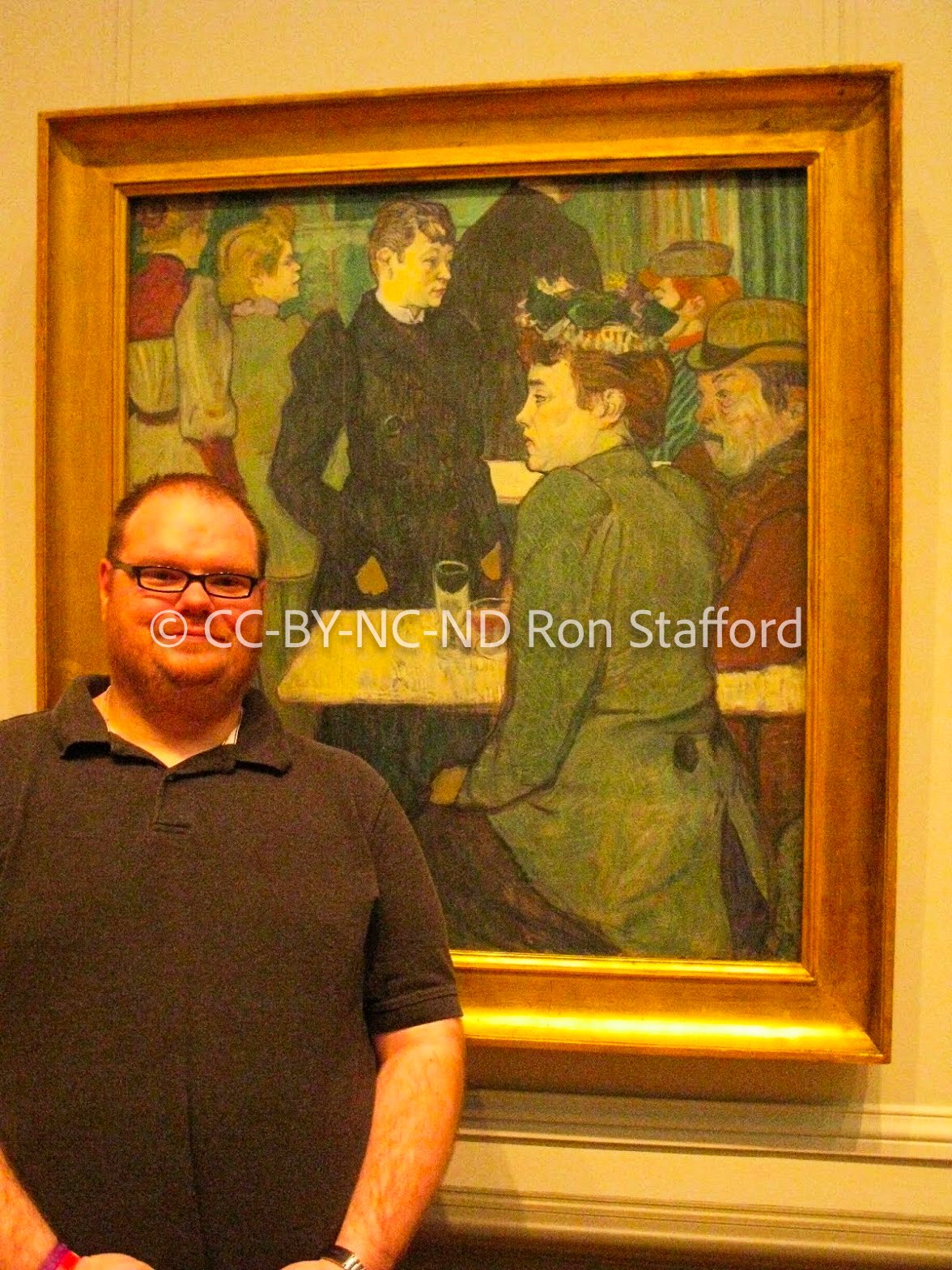
Standing beside Toulouse-Lautrec at the National Gallery, I felt less like a visitor and more like a distant cousin arriving late to the family reunion. His world of cabaret light, human frailty, aristocratic mischief, and wounded beauty speaks to my own Southern Gothic view of life: broken bodies, sharp wit, stubborn grace, and art blooming right where the plaster cracks.