The Gospel According to Kerlix: A Small Meditation on Gauze, Grace, and the Bubble-Gum Machine of Providence
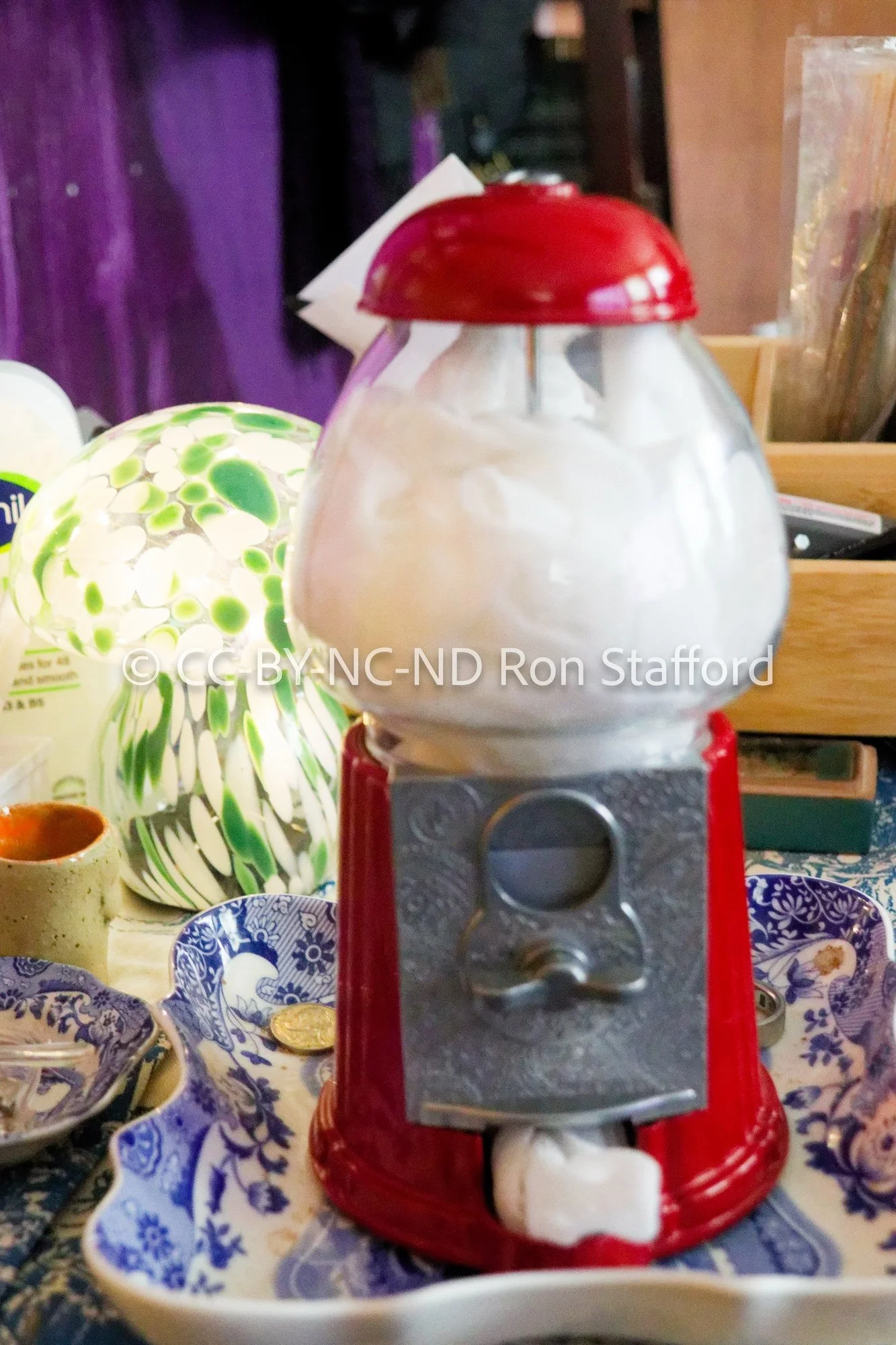
Photo caption:
“Gauze in the bubble-gum machine: because apparently even wound care has developed a taste for irony.”
© CC BY-NC-ND Ron Stafford
There are seasons in life when one develops unexpected loyalties.
Some people become devoted to coffee. Some to a particular pen. Children, with their sticky coins and holy anticipation, stand before bubble-gum machines as if the kingdom of heaven might descend in a bright pink orb.
I, however, have reached the stage of life where I look upon gauze with reverence.
Not just any gauze, mind you. I have standards now. I have opinions. I have become, against all odds, a man of discernment in the sacred textile arts of wound care. Standard rolled gauze has its place, bless its thin little heart, but Kerlix—ah, Kerlix is different. Kerlix is the Jane Austen heroine of wound dressings: sensible, dependable, quietly superior, and not at all impressed by your drama.
As Jane Austen once wrote, “There is nothing like staying at home for real comfort” (Austen, 1815/2008, p. 61). I feel certain she was speaking of Mansfield Park, but I am choosing to believe she also foresaw the emotional stability offered by a good roll of Kerlix on a medically complicated afternoon.
This photograph, then, is not merely a whimsical gumball machine stuffed with gauze. It is autobiography. It is theology. It is a portrait of the strange economy of healing, where the smallest things become precious. In childhood, we fed coins into machines hoping for candy. In adulthood, I look at this little red dispenser and think, “Absolutely not. That Kerlix is too precious to be dispensed casually like bubble gum.”
Scripture has something to say about this, too. In Luke’s Gospel, the Good Samaritan does not offer vague encouragement from across the road. He comes close. He sees the wound. He binds it. He pours oil and wine. He makes care tangible (Luke 10:34, New Revised Standard Version Updated Edition). Healing, in that story, is not abstract. It is linen, oil, patience, and inconvenience.
And perhaps that is why gauze has become so important to me. It is not glamorous. It does not arrive with trumpets. It simply holds things together while the body does its slow, stubborn work. It reminds me that grace is often absorbent, quiet, and wrapped around the vulnerable places.
There is also Ecclesiastes, that brutally honest old friend, reminding us that there is “a time to heal” (Ecclesiastes 3:3, NRSVue). I have learned that the time to heal is rarely efficient. It does not consult my calendar, my ambitions, or my preference for being impressive. Healing is humbling. It asks for repetition. It asks for clean hands, fresh dressings, and the willingness to begin again.
So here it is: my little altar to Kerlix. My bubble-gum machine of medical realism. My red-domed reliquary of practical grace.
And let the record show: standard gauze may be acceptable in emergencies, but Kerlix has become the good china of wound care. You do not toss it around. You do not waste it. You do not dispense it like candy to the neighborhood children.
You respect the Kerlix.
You honor the Kerlix.
And, when necessary, you wrap yourself in it and keep going.
References
Austen, J. (2008). Emma. Oxford University Press. (Original work published 1815)
National Council of Churches. (2021). New Revised Standard Version Updated Edition Bible. Friendship Press.