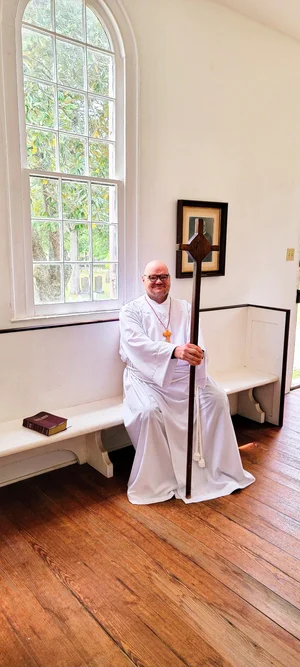
At the Gate of Surrender
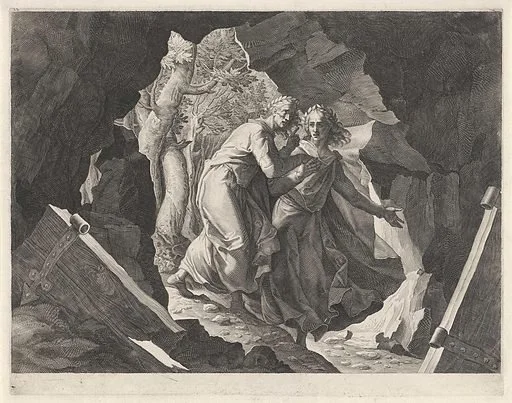
Dante and Virgil stand before the gate of Hell, crossing from the world of human certainty into the terrifying mystery of divine judgment. The image captures the moment when Dante’s spiritual journey becomes unavoidable: to understand sin, suffering, and redemption, he must first descend into darkness.
Dante Alighieri wrote one of the most haunting lines in all of literature: “Lasciate ogne speranza, voi ch’intrate” — “Abandon all hope, ye who enter here” (Alighieri, 1867/2005). In The Divine Comedy, those words appear over the gate of Hell, marking the beginning of a terrifying descent into suffering, judgment, and truth. Dante was an Italian poet, writer, and philosopher whose Divine Comedy is considered one of the most important works of medieval literature and one of the greatest works written in Italian.
Lately, I have thought a lot about that gate.
Diabetes, infection, surgery, and the fear of amputation have brought me to a place I never wanted to enter. There are days when my body feels like a battlefield. There are days when the wound, the pain, the doctors, the waiting, and the uncertainty feel like their own kind of inferno. But if I am honest, the hardest part has not only been the physical suffering. The hardest part has been realizing how much I still want to control everything.
I say I trust God.
But then I make my plans.
I say I surrender.
But then I cling to what I think my life should look like.
I say, “Lord, use me.”
But then I add conditions, timelines, preferences, and escape routes.
That is the deeper struggle. Not just diabetes. Not just infection. Not just the fear of losing part of myself. The real struggle is my inability to totally give myself over to what God wants me to do. I have spent so much of my life trying to serve others, trying to do good, trying to be useful, and trying to build something meaningful. But even service can become my plan instead of God’s will if I refuse to be still and listen.
Dante’s journey through Inferno, Purgatorio, and Paradiso is not simply a story about punishment. It is the story of a soul being led through darkness, purification, and finally toward divine love. His journey begins in confusion and fear, but it does not end there. It ends with the vision of “the Love that moves the sun and the other stars” (Alighieri, 1867/2005).
Maybe that is where I am.
Not abandoned by God.
Not punished by God.
But being asked to stop running, stop managing, stop bargaining, and finally listen.
The gate may say, “Abandon all hope,” but Christ says something different. Christ asks me to abandon false hope — the hope that I can save myself, control every outcome, fix every problem, and force my life into the shape I planned. He asks me to trade that for real hope: the hope that comes from surrender.
I am not there yet.
I still struggle. I still get angry. I still get scared. I still want my own way. I still want healing on my schedule and clarity on my terms.
But maybe surrender is not one grand dramatic moment. Maybe surrender is daily. Maybe it is choosing, again and again, to say: “God, I do not understand this, but I am listening.”
Dante’s journey did not end in Hell.
And I pray mine does not end in fear.
I am still walking. I am still wounded. I am still learning to surrender.
But even here, even now, I believe God is moving me toward the Love that moves the sun and the other stars.
Referemces
Alighieri, D. (2005). The divine comedy (H. W. Longfellow, Trans.). Online Library of Liberty. Original work published 1867. https://oll.libertyfund.org/titles/the-divine-comedy-vol-1-inferno-english-trans
Caetani, M. (1855). Universal figure of The Divine Comedy [Lithograph]. In La materia della Divina Commedia di Dante Alighieri dichiarata in VI tavole. Public Domain Image Archive. https://pdimagearchive.org/images/23667faf-8bc0-44cc-b070-a6103b9f12d3/
Public Domain Super Heroes Wiki. (n.d.). Dante Alighieri. Fandom. Retrieved May 14, 2026, from https://pdsh.fandom.com/wiki/Dante_Alighieri
Sadeler, A. (ca. 1580–1629). Dante and Virgil enter hell through a gate [Engraving]. Rijksmuseum; Look and Learn History Picture Archive. https://www.lookandlearn.com/history-images/YR0168096/Dante-and-Virgil-enter-hell-through-a-gate
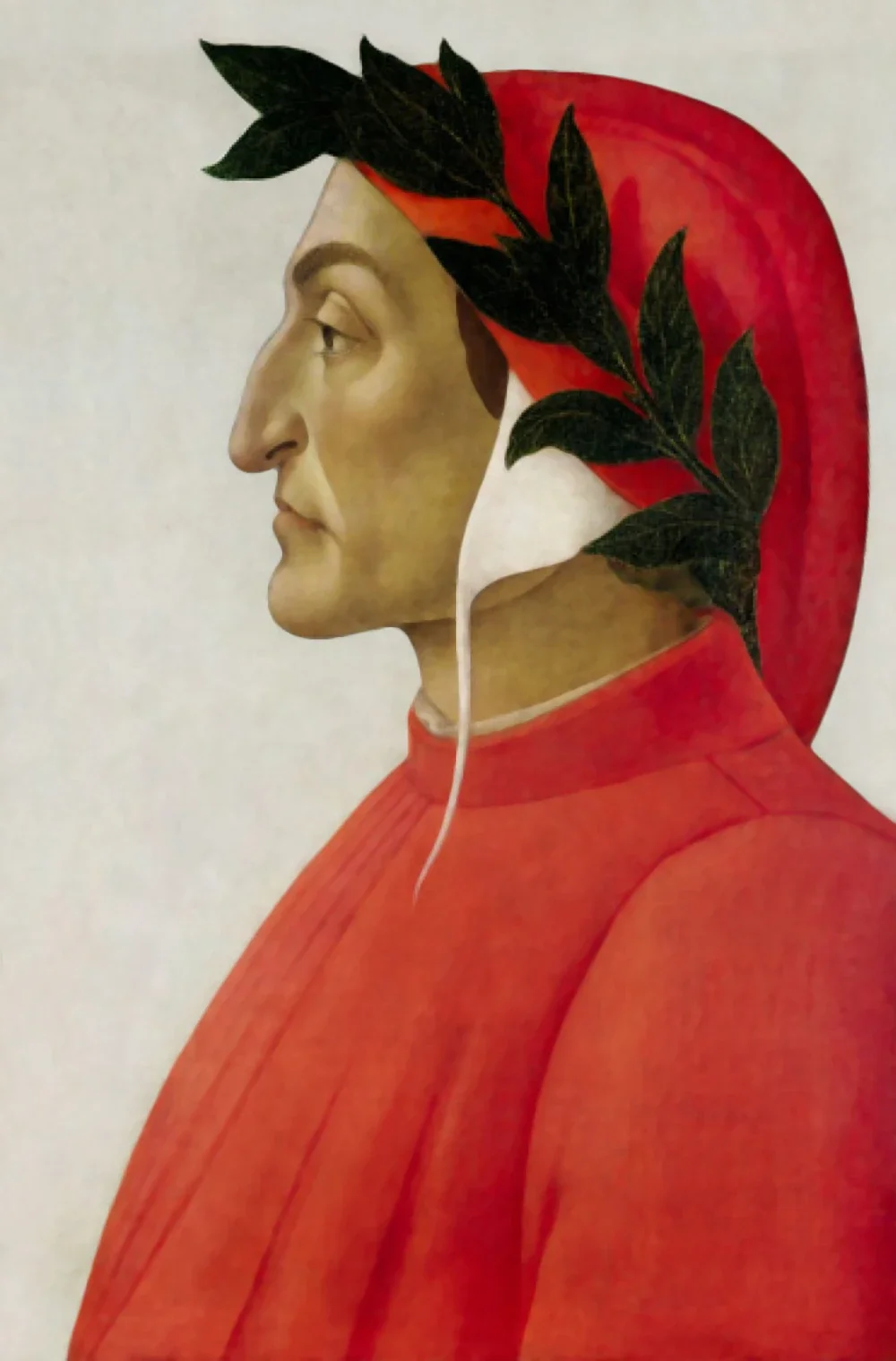
Dante Alighieri, the poet of the soul’s descent and return, reminds me that suffering is not always the end of the story. Sometimes the road to God begins in the places we least wanted to enter.