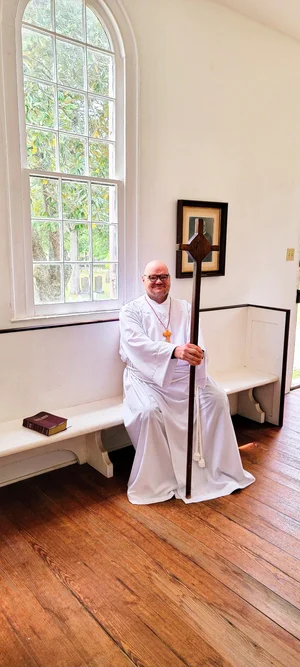
From the Old World to the Pee Dee: The Ancestral Journey That Made Me
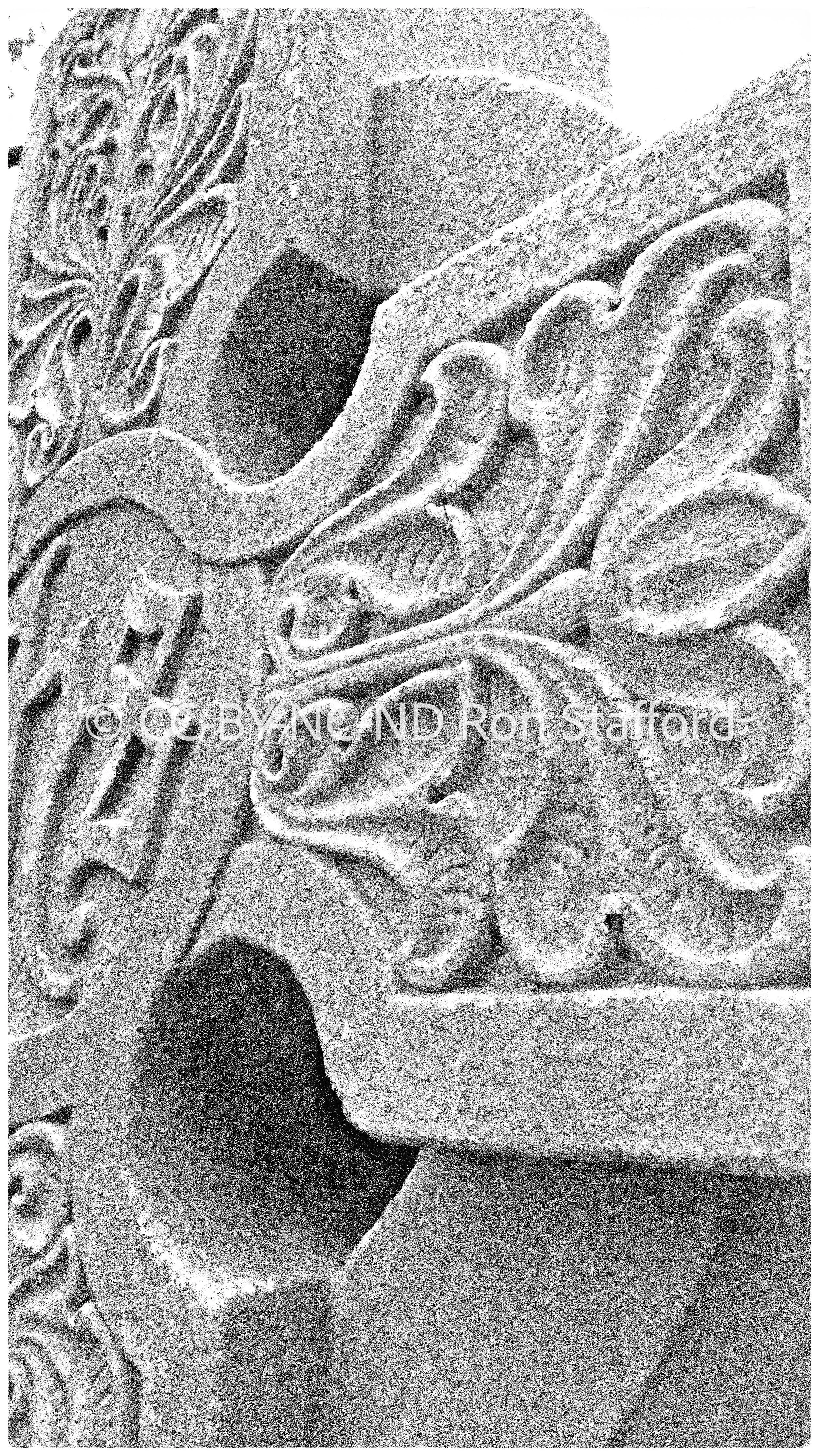
Stone remembers what blood forgets.
In this carved leaf and weathered shadow, I see the shape of ancestry itself — faith chiseled into form, beauty surviving the centuries, and the old world still whispering through the Carolina soul. My ancestors crossed water, field, chapel, and hardship; somewhere along the way, they left me this hunger for God, learning, culture, and every humble place where beauty refuses to die.
From the Old World to the Pee Dee: The Ancestral Journey That Made Me
There is something humbling about seeing your ancestry laid out across regions, rivers, borderlands, and old countries with names that already sound like they belong in a book I would buy, underline too aggressively, and then quote at dinner until someone gently changes the subject.
England. Scotland. Wales. Ireland. The Netherlands. Germanic Europe. A cold northern whisper from Iceland and Finland. Then, finally, the Carolinas: the South Carolina and North Carolina borderlands, the Lower Pee Dee, the Santee River watersheds, the Eastern Piedmont, and the Central Carolinas.
That is not just geography.
That is a spiritual itinerary.
It is a long road from the British Isles and Western Europe to the sandy soil, pine trees, river bends, old churches, family cemeteries, and stubborn beauty of the Pee Dee. It is the story of people moving from one world into another, carrying language, faith, habits, fears, recipes, songs, prayers, and probably at least one relative who believed every problem could be solved by hard work, black coffee, and not discussing feelings unless absolutely cornered.
And somehow, through all that movement, all that survival, and all that history, I became me.
A Southern man with a British imagination.
A Christian with a library for a soul.
A person who believes education is not decoration but deliverance.
A man who can stand in an old churchyard and feel both the Kingdom of God and the urgent need to write a blog post before the feeling gets away.
The English Thread: Order, Manners, Books, and the Sacred Business of Civilization
The English part of my ancestry makes almost too much sense.
I have long felt drawn to England, not simply as a place, but as an atmosphere. Parish churches. Old universities. Jane Austen drawing rooms. Oxford stone. Tea that somehow becomes a moral framework. The sense that civilization depends on words being chosen carefully, books being respected, and people not acting like furniture was invented yesterday.
This English thread feels connected to my love of order, manners, education, and ritual.
I do not mean manners as snobbery. I mean manners as moral architecture. The small disciplines that say, “You matter enough for me to be considerate.” A thank-you note, a held door, a properly worded invitation, a dinner table where people are treated with dignity, these are not trivial things. They are the little liturgies of human decency.
It explains why Emily Post and the Bible sit so comfortably together in my imagination. One teaches me how to live before God. The other teaches me how to behave once I get invited to somebody’s house after church.
And honestly, both are necessary.
This English inheritance also speaks to my love of libraries and learning. The library has always felt to me like a secular cathedral, though I use “secular” carefully because every library I have ever loved had a kind of holiness about it. Books are not just objects. They are witnesses. They are little arks carrying human thought across time.
That is why education matters so deeply to me. It is not about collecting degrees like decorative plates. It is about formation. It is about becoming more fully human.
The Celtic Thread: Lament, Fire, Poetry, and Faith With Mud on Its Boots
Then there is the Celtic and Gaelic thread, Scotland, Ireland, Wales, Northern Ireland. This part of my ancestry does not feel quiet. It feels like wind over stone, hymns in minor keys, old prayers, fierce memory, and a refusal to pretend life is simple.
This is the part of me that understands lament.
It is the part that hears the Psalms and thinks, “Yes, finally, somebody is telling the truth.” David praises God, argues with God, begs God, thanks God, and occasionally sounds like he needs hydration and a long nap. That feels spiritually honest to me.
My faith has never been decorative. It cannot be. Life has not allowed that. After illness, amputation, wound care, uncertainty, pain, healing, and starting again, I need a faith that can stand in the hospital room. I need a God who is not offended by grief. I need prayer that can survive bad news, long nights, and the sacred indignity of needing help.
The Celtic imagination understands that beauty and sorrow are not enemies. They often arrive holding hands.
That may be why I am so drawn to old churches, ruins, graveyards, hymns, and landscapes that look like they have been praying longer than I have been alive. Give me a worn stone wall, a riverbank, a weathered cemetery, or a chapel with age in its bones, and I will find meaning there.
Possibly too much meaning.
But that is my burden, and I carry it with dramatic dignity.
The Dutch and Germanic Thread: Systems, Discipline, Craft, and the Gospel According to Organization
Alongside the British and Celtic roots, there is also Western European ancestry - Dutch, Germanic, and neighboring regions.
This feels like the part of me that builds systems.
The practical part.
The librarian part.
The person who looks at chaos and says, “This needs a framework, a label, a policy, a workflow, and possibly a shared folder with naming conventions.”
It is not the flashiest part of my personality, but it is one of the most useful. My professional life has been shaped by access, structure, and student support. Libraries. Learning resources. OER. Digital equity. Rural broadband. Academic systems. Student persistence. These are not abstract ideas to me. They are the mechanisms by which real people either get through the door or get left outside knocking.
And I think about those ancestral people moving into a new world. They would have needed discipline. They would have needed churches, schools, ledgers, land records, tools, roads, agreements, and memory. Survival requires imagination, yes, but it also requires someone to know where the documents are.
That person, in my family line, was apparently me.
The Dutch-Germanic thread is the part of me that believes beauty matters, but so does the agenda. It is the part that can love Turner, Dante, and Virginia Woolf while also caring deeply about whether the LMS course shell is organized in a way students can actually navigate.
Culture needs poetry.
Education needs structure.
And God, in His mercy, made some of us care about both.
The Nordic Whisper: Solitude, Endurance, and the Inner Weather
There is also a small northern thread in my ancestry, a touch of the Nordic world. It is not the main story, but it is there like a cold wind under the door.
I like knowing that.
I am not about to claim I am a Viking and start wearing horned helmets, especially since actual Vikings did not wear horned helmets and I refuse to be historically inaccurate in public unless it is for comic effect.
But there is something in that northern trace that feels familiar: solitude, endurance, inwardness, and a taste for beauty that does not beg to be liked.
I have always had a monastic streak. I like quiet rooms, books stacked like provisions, weather that makes reflection feel mandatory, and enough silence to hear my own thoughts stop performing for company.
That northern whisper feels like the part of me that can endure.
Not loudly. Not theatrically. Just steadily.
The part that says, “Winter comes. Sit still. Read. Pray. Survive. Begin again.”
The Carolina Settlement: Where the Old World Became My World
But the journey does not end in Europe.
It comes to the Carolinas.
That is where the old world becomes my world.
The South Carolina and North Carolina borderlands are not just a destination on a map. They are the soil of my formation. The Lower Pee Dee, the Santee River watersheds, the Eastern Piedmont, the Central Carolinas, these places are not abstractions to me. They are roads, churches, courthouse records, family stories, pine woods, river air, school buildings, graveyards, and the particular Southern habit of turning memory into identity.
This is where the English love of order, the Celtic instinct for lament, the Germanic discipline of systems, and the frontier need for survival merged into something Carolina.
And that explains me.
I am not simply Southern in the sweet-tea-and-front-porch sense, though I honor both institutions. I am Southern in the old borderland sense: tied to place, shaped by faith, alert to history, suspicious of shallow glamour, and deeply aware that beauty often survives in humble places.
The Carolinas made people who had to be practical and prayerful at the same time. They built churches before they built comfort. They valued Scripture because it gave shape to suffering. They valued education because literacy meant survival, law, faith, letters from home, and a way forward for the next generation.
That inheritance lives in me.
It is why I see education as sacred work.
It is why I see the church as more than a Sunday habit.
It is why I believe culture is not luxury. Culture is memory with manners.
Religion: The Altar Beneath the Family Tree
When I trace this ancestral journey, I see religion running through it like an underground stream.
Not always perfect religion. Not always gentle religion. Human beings have a remarkable gift for turning divine things into committee work and moral superiority. We must be honest about that.
But still, faith endured.
The Bible crossed oceans. Prayer crossed fields. Hymns crossed generations. Churchyards held the dead while the living kept going. In the Carolinas, faith became part of the architecture of daily life. Birth, death, marriage, grief, harvest, illness, war, poverty, hope, all of it passed beneath the shadow of the church.
That is still true for me.
My faith is not an accessory. It is not a decorative pin I wear when life is going well. It is the structure underneath me when life is not going well at all.
I have learned that God is not only found in stained glass and polished liturgy, though I dearly love both. God is also found in wound care, waiting rooms, wheelchair ramps, late-night fear, stubborn healing, and the strange mercy of waking up one more morning with work still to do.
That is ancestral too.
A faith that survives.
A faith that argues.
A faith that limps and still comes to the altar.
Education: The Inheritance I Chose
If religion gave me a sacred frame, education gave me a calling.
I do not know how many of my ancestors had formal education. Many probably had very little. That makes learning more precious to me, not less.
Education is the great threshold.
It is the doorway between being trapped and becoming. It is how people learn to name their world, question their world, and sometimes change their world. It is how a person born into limitation discovers that the mind is not fenced in by geography, poverty, disability, fear, or someone else’s low expectations.
That is why my life’s work has centered on libraries, student success, digital equity, and access. I care about the student who is bright but blocked. I care about the rural student with no reliable internet. I care about the adult learner trying again. I care about the person standing outside the institution wondering if there is a place for them.
My ancestors crossed oceans and borders.
My work has been about helping students cross thresholds.
That is the same story in a different key.
Culture: Beauty as Inheritance
And then there is culture.
Art. Literature. Etiquette. Music. Architecture. Old churches. Museums. Books. Language. Ritual. The way a room feels when someone has cared enough to make it gracious.
Some people treat culture as decoration. I do not.
Culture is how human beings refuse to vanish.
A hymn says, “We were here.”
A poem says, “This is what sorrow felt like.”
A painting says, “Look again.”
A church says, “People prayed here before you arrived and will pray here after you are gone.”
A well-set table says, “You are welcome, and welcome matters.”
This is why I am drawn to beauty in humble places. Not only grand cathedrals and famous paintings, though I love those with all the restraint of a man who should probably not be left unsupervised in a museum gift shop. I mean the small beauties too: an old prayer book, a country church, a worn family Bible, a river at dusk, a cemetery stone, a handwritten note, a library stamp in an aging book.
Beauty does not have to be grand to be holy.
Sometimes it is holiest when it is nearly overlooked.
What the Journey Made
So what did this ancestral journey make?
It made a man with English order, Celtic depth, Germanic discipline, Nordic inwardness, and Carolina rootedness.
It made a man who loves God but refuses to pretend faith is easy.
A man who believes education is liberation.
A man who thinks manners are a form of mercy.
A man who sees culture not as elitism, but as the human soul leaving evidence that it lived, suffered, learned, prayed, and loved.
It made a man of the Pee Dee with an old-world imagination.
A man who can sit in a Southern church and somehow feel England, Scotland, Wales, Ireland, Western Europe, the Carolina borderlands, and every unnamed ancestor who crossed water, land, grief, and history so that I might one day sit here with books, prayers, wounds, credentials, memories, and a cup of tea, trying to understand why I am the way I am.
The answer is not just blood.
It is longing.
For God.
For learning.
For beauty.
For order.
For belonging.
For a life that means something beyond survival.
Somewhere between the old countries, the Atlantic crossing, the Carolina borderlands, and the stubborn cathedral of my own heart, those longings became me.