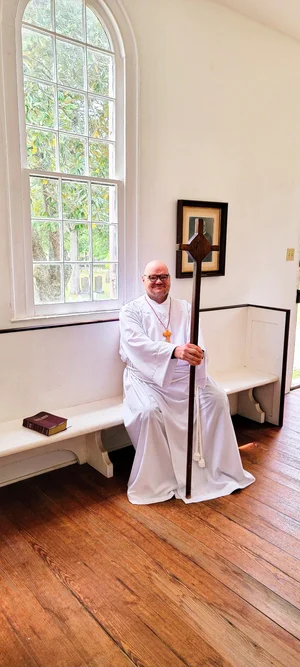
The Bible, Emily Post, and the Last Georgian Gentleman in a World Without Calling Cards
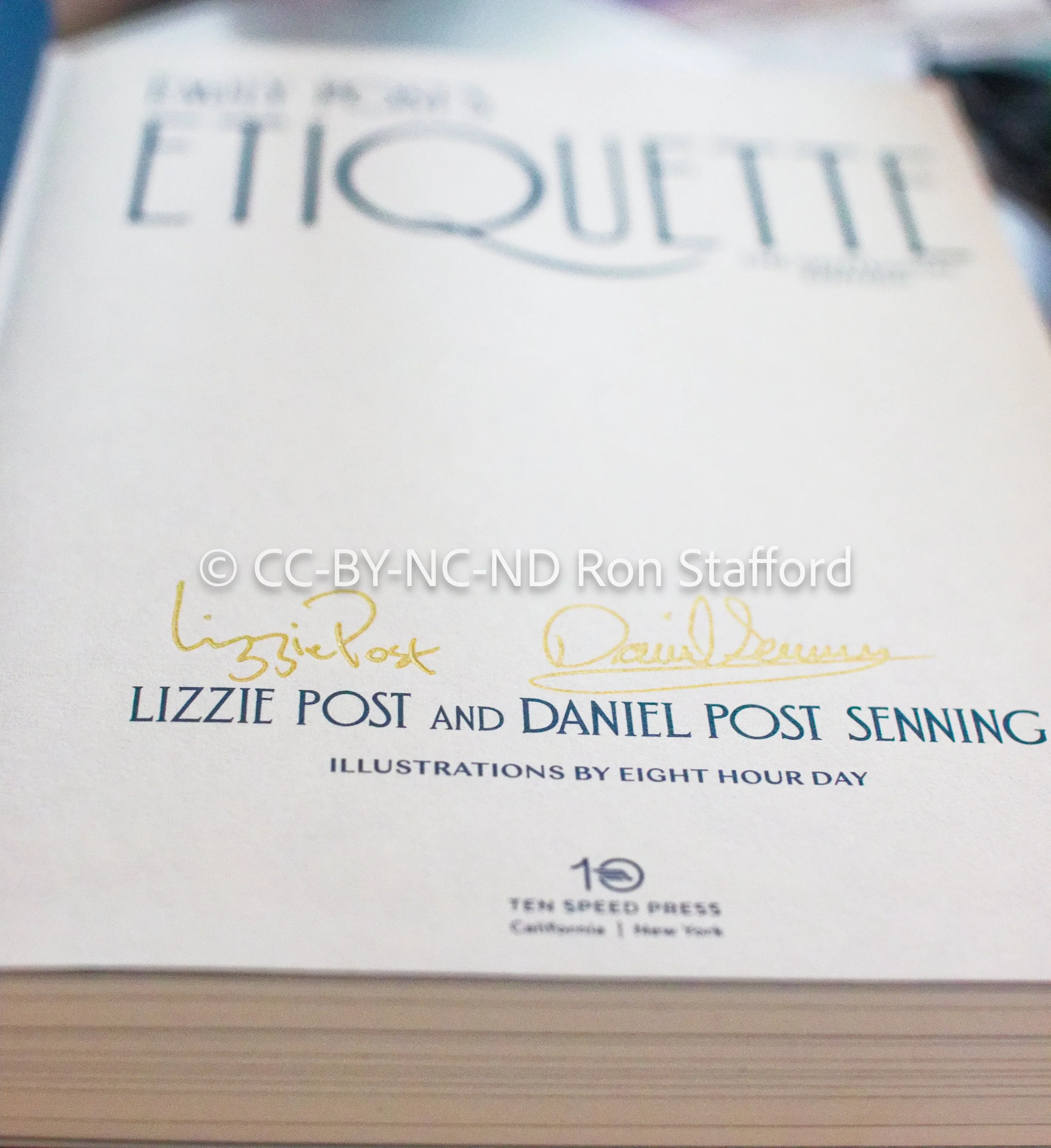
Two books for keeping the soul and the silverware in order: Scripture for grace, Emily Post for manners, and both for surviving the modern world without surrendering beauty, hospitality, or a properly written thank-you note.
There are two books I hold in high esteem, and I say this without irony, though possibly with a raised eyebrow and a cup of tea strong enough to resurrect the minor prophets: The Bible and Emily Post’s Etiquette.
One teaches me how to live before God. The other teaches me how to move through the world with grace, restraint, and just enough polish not to mistake honesty for rudeness or comfort for carelessness. And somewhere between Scripture and Emily Post stands the artist in me, the part of my soul that believes beauty, order, kindness, and a well-timed thank-you note are all small acts of resistance against a world determined to become louder, uglier, and less civilized by the minute.
Both, I would argue, are necessary.
Now, before someone clutches their pearls, or worse, misuses them as a fashion accessory, let me be clear: I am not placing Emily Post on the same theological shelf as Holy Scripture. The Bible is the Word of God. Emily Post is the word of civilization whispered firmly over the punch bowl. But I do believe both books are concerned, in their own ways, with a question that feels more urgent the older I get:
How do we treat one another when no one is forcing us to be decent?
That, my friends, is where manners stop being napkin-folding and become moral formation.
I have long suspected that I am, in fact, a Georgian gentleman trapped in the modern world. Not the powdered-wig, duel-at-dawn, inherit-a-country-house sort, though, should one become available, I would accept it with Christian humility and tasteful drapery. I mean the kind of gentleman who believes one should write thank-you notes, dress like he expects to encounter civilization, and understand that “being authentic” is not a divine commandment to be rude in public.
Modern life is loud. It is hurried. It is full of people shouting into speakerphones in grocery aisles as if the rest of us have subscribed to their family drama. We live in an age where “no problem” has replaced “you’re welcome,” where “LOL” is apparently a full emotional response, and where people will stand in the doorway of a public building holding it open for absolutely no one while blocking everyone.
Somewhere, Emily Post is fanning herself in the afterlife.
And I am right there with her.
As I get older, I find myself valuing good manners more, not because I have become stuffy, although I do admit I have a soul that enjoys a well-set table and a properly timed exit. I value manners because I have lived enough life to know that people are carrying more than we can see. Some folks walk into a room wounded. Some walk in lonely. Some walk in afraid. Some walk in barely held together by caffeine, prayer, and the grace of God.
Manners are not about superiority. They are about mercy.
A good manner says, “I see you.”
A good manner says, “You are safe here.”
A good manner says, “I will not add unnecessary ugliness to your already complicated day.”
That is where Emily Post and the Bible begin to nod politely at one another across the room.
The Bible repeatedly teaches hospitality, kindness, and reverence toward the stranger. One of my favorite passages is from Hebrews:
“Do not neglect to show hospitality to strangers, for by doing that some have entertained angels without knowing it” (Hebrews 13:2, NRSV).
Now, if that verse does not put starch in your collar and fear in your customer-service voice, I do not know what will.
The stranger at the door might not be an interruption. The person needing help might not be a burden. The one who annoys us, slows us down, or catches us when we are tired might be, if not an angel, at least someone beloved by God.
That changes the whole room.
Suddenly, manners are not just social polish. They are spiritual discipline.
When we say “please,” “thank you,” “come in,” “sit down,” “let me help,” or “I am glad you are here,” we are doing more than following a social code. We are practicing hospitality. We are training the soul away from selfishness. We are making room.
And let us be honest: some of us need training.
I include myself. I have a dramatic inner monologue that could frighten livestock. There are days when my patience is thinner than communion wafers and my face says what my Christian formation is trying valiantly to suppress. That is exactly why I need both Scripture and etiquette. The Bible calls me to love my neighbor. Emily Post reminds me not to roll my eyes while attempting it.
A saint I am not. A work in progress with a fondness for good stationery? Absolutely.
The Georgian world I admire, at least in imagination, understood something we have largely misplaced: public behavior matters. How one entered a room mattered. How one addressed a guest mattered. How one wrote, sat, dined, listened, and thanked mattered. Of course, that age had plenty of sins and hypocrisies, and I am under no illusion that everyone was sipping tea in moral perfection. But there was at least an understanding that civilization required restraint.
Restraint is a deeply underrated virtue.
Not every thought requires a public debut. Not every irritation needs to become a sermon. Not every opinion must be flung across the internet like a chamber pot from an upper window. Sometimes grace looks like silence. Sometimes dignity looks like not answering the text immediately. Sometimes Christian charity looks like saying, “Bless your heart,” and then actually praying for the heart in question.
This is why I love etiquette. Real etiquette is not about snobbery. It is not about knowing which fork to use so you can silently judge those who do not. That sort of etiquette is just vanity wearing gloves. True etiquette is about easing the discomfort of others. It is about making the guest feel welcome, the stranger less strange, the awkward moment less brutal.
Emily Post understood manners as a kind of social kindness. The rules were never meant to be weapons. They were meant to create peace.
And Scripture goes even deeper. Jesus does not merely tell us to be polite to people we already admire. He tells us to love our neighbor. He tells us to welcome the stranger. He tells us that how we treat “the least of these” matters. In Matthew 25, Christ identifies himself with the hungry, the thirsty, the stranger, the naked, the sick, and the imprisoned. Hospitality becomes holy ground.
That is a terrifying and beautiful thought.
It means the person who needs kindness may not arrive looking convenient. The stranger may not be charming. The guest may not know the rules. The wounded may be messy. The lonely may talk too long. The tired cashier may not smile. The elderly man may move slowly. The child may be loud. The friend may be needy. The world may not behave like a drawing room in Bath.
Still, we are called to make room.
That is the heart of manners at their best.
A gentleman, Georgian, Southern, Christian, or otherwise, is not made by his coat, his vocabulary, his bookshelves, or his ability to quote Jane Austen at socially inappropriate moments, though I do believe that last one should count for something. A gentleman is made by how he treats people who cannot give him anything in return.
Does he honor the stranger?
Does he offer the chair?
Does he write the note?
Does he listen without rushing?
Does he make people feel less alone in the room?
That is where manners become ministry.
In my own life, I have come to believe that good manners are one of the last quiet rebellions left to us. In a rude age, courtesy is countercultural. In a selfish age, hospitality is radical. In a noisy age, listening is almost monastic. In a world that rewards performance, gentleness feels like a relic, and perhaps that is why I treasure it.
Maybe I am old-fashioned. Fine. I have been called worse, and usually by people who could benefit from a handwritten thank-you note.
But I do not think old-fashioned is always an insult. Some old things are old because they have lasted. Scripture has lasted. Hospitality has lasted. Gratitude has lasted. The human need to be welcomed has lasted.
And yes, Emily Post has lasted too, bless her well-mannered heart.
So, I will keep my two books close: the Bible for the soul, Emily Post for the table, and both for the daily work of becoming less self-centered and more gracious. I will keep trying to be the Georgian gentleman my spirit insists I am, even if the modern world keeps testing me with automated phone menus, reply-all emails, and people who think pajama pants are airport attire.
I will try to remember that every stranger is still made in the image of God.
I will try to treat people as though angels might be traveling incognito.
And if an angel does arrive at my door, I hope I have the sense to offer coffee, a chair, and my best manners.
Because hospitality may begin with etiquette.
But if we do it right, it ends in grace.
References
The Holy Bible, New Revised Standard Version. (1989). National Council of Churches.
Post, E. (1922). Etiquette in society, in business, in politics, and at home. Funk & Wagnalls.
Post, L., & Senning, D. P. (2017). Emily Post’s etiquette: Manners for today (19th ed.). William Morrow.
Post, L., & Senning, D. P. (2022). Emily Post’s etiquette: The centennial edition. Ten Speed Press.
Stafford, R. (2026). Emily Post’s etiquette [Photograph].