INTELLECTUALISM - FAITH - FACADE: BEAUTIFUL, WOUNDED, COMPLICATED, AND STILL SPEAKING.
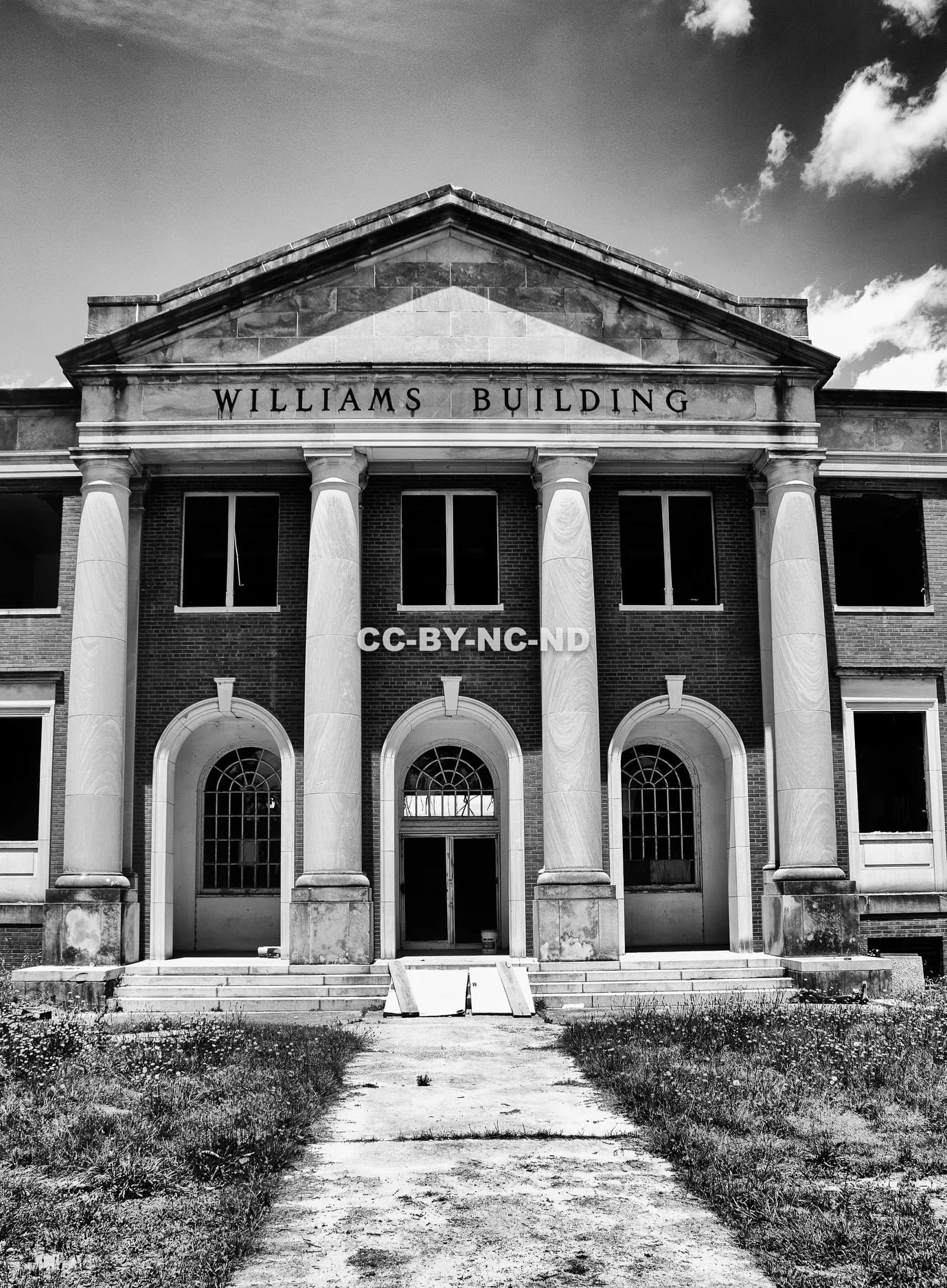
Facade of the Williams Building, former site of the South Carolina Lunatic Asylum / South Carolina State Hospital, Columbia, South Carolina.
This photograph holds the tension I often feel when standing before Southern ruins: beauty and burden occupying the same space. The Williams Building facade is not just architecture; it is a remnant of a complicated institutional past. It asks us to look carefully at what the South built, what it preserved, what it neglected, and who was held inside its walls. For me, this is where history, faith, and the humanities meet—not in easy nostalgia, but in the harder work of memory, mercy, and moral attention.
I have been thinking more deeply about my own intellectual life—not as something detached, polished, or abstract, but as something rooted. My love of history, literature, theology, architecture, archives, and the humanities did not come from nowhere. It came from place. It came from Southern soil, old churches, family stories, quiet libraries, rural roads, worn hymnals, courthouse squares, abandoned buildings, and the stubborn belief that the past is never really past.
My intellectualism has always been Southern in that sense. Not Southern as performance or nostalgia, but Southern as inheritance. It is shaped by memory, faith, contradiction, beauty, pain, and survival. It is the kind of intellectualism that understands that a church door, a cemetery stone, a family Bible, a hospital facade, an old photograph, or a column on a historic building can carry as much meaning as any formal theory. The humanities taught me how to name that meaning. Faith taught me how to sit with it.
This photograph of the Williams Building facade, on the former site of the South Carolina Lunatic Asylum and later the South Carolina State Hospital, speaks directly to that kind of rooted intellectualism. The South Carolina Lunatic Asylum was authorized by the South Carolina General Assembly in 1821, and the cornerstone of the original Robert Mills-designed building was laid in 1822; the building was completed in 1827 (National Park Service, 1973; South Carolina Department of Archives and History [SCDAH], n.d.). It was one of the earliest state-supported mental health institutions in the United States, a place built with the language of reform, order, architecture, and public responsibility. Yet, like so many Southern institutions, its history is layered: care and confinement, science and stigma, public service and human suffering.
That is why places like this matter to me. They remind me that history is not just what we admire. History is also what we must answer for. The former Bull Street campus was not simply a collection of buildings; it was a working institutional landscape where people lived, worked, received care, and experienced confinement. Historic Columbia notes that the Babcock Building, completed in phases from 1857 to 1885, served as the “front door” of the South Carolina State Hospital campus, while other structures supported the daily operations of what became almost a village unto itself (Historic Columbia, n.d.). That phrase stays with me: a village. A whole world existed there, with its own routines, silences, hierarchies, and hidden griefs.
My love of history has always been tied to these kinds of places. I do not experience buildings as empty shells. I read them. I photograph them. I listen to them. A facade like this becomes a text. The columns, the broken windows, the symmetry, the name carved across the front—all of it speaks. It speaks of ambition, institutional authority, architectural beauty, and the fragile lives that passed through those doors. To stand before it is to be reminded that the humanities are not decorative. They are necessary. They teach us how to interpret what remains.
Faith has shaped this just as deeply. My faith journey has not always been easy or simple. It has been full of recovery, surrender, resistance, and rediscovery. There have been seasons when I tried to intellectualize everything—when I wanted answers, structure, plans, and certainty. But faith, especially faith rooted in the Episcopal church tradition, has taught me that some truths are not mastered. They are received. They are lived into slowly. They are carried with humility.
That Southern grounding matters. I come from a place where faith and education are not separate streams. They often meet in the same person, the same family, the same small-town institution. The church teaches endurance. The humanities teach interpretation. History teaches humility. Education teaches possibility. Together, they have shaped how I see the world.
The South Carolina State Hospital’s records also remind us that institutional history is human history. The South Carolina Department of Archives and History notes that early patient records can include admission dates, counties of residence, ages, descriptions of illness, treatments, removals, cures, and deaths (SCDAH, 2020). Those details are more than administrative data. They are traces of human lives. As an archivist and educator, I cannot see those records as mere paperwork. They are evidence of people who were named, categorized, treated, misunderstood, remembered, and sometimes forgotten.
That is where my faith presses on my intellectual life. It will not let me treat history as a hobby or beauty as an escape. Faith asks what mercy requires. Education asks what we must learn. History asks what we must remember. The humanities ask us to remain human while doing all three.
My love of learning is not about appearing sophisticated. It is about survival, witness, and calling. It is about understanding the world deeply enough to serve it more honestly. It is about knowing that where I come from matters—not because it is perfect, but because it formed me. The South gave me a language of place. Faith gave me a language of meaning. Education gave me the tools to connect the two.
So when I think about my intellectualism now, I do not see it as something separate from my roots. I see it as something grown from them. It is in the churchyards of Cheraw, the architecture of Charleston, the stories of rural students, the archives I have handled, the photographs I have taken, and the classrooms and libraries where I have tried to help others find their own way forward.
It is also in places like the Williams Building facade: beautiful, wounded, complicated, and still speaking.
I am learning that to be intellectually serious does not mean leaving home behind. Sometimes it means returning to it with clearer eyes. Sometimes it means seeing that the place that made you also gave you the questions you were born to ask.
And for me, those questions have always lived somewhere between faith and history, between scholarship and memory, between the sacred and the Southern soil beneath my feet.
REFERENCES
Historic Columbia. (n.d.). Bull Street Campus. https://www.historiccolumbia.org/current-projects-and-initiatives/bull-street-campus
National Park Service. (1973). National Register of Historic Places inventory—nomination form: South Carolina State Hospital, Mills Building. U.S. Department of the Interior. https://npgallery.nps.gov/NRHP/GetAsset/NHLS/70000890_text
South Carolina Department of Archives and History. (n.d.). South Carolina State Hospital, Mills Building, Richland County. South Carolina National Register Properties. https://www.nationalregister.sc.gov/richland/S10817740004/index.htm
South Carolina Department of Archives and History. (2020, October 14). Research tip of the month: Records of the State Hospital/Department of Mental Health. https://scdah.sc.gov/news/2020-10/research-tip-month-records-state-hospitaldepartment-mental-health
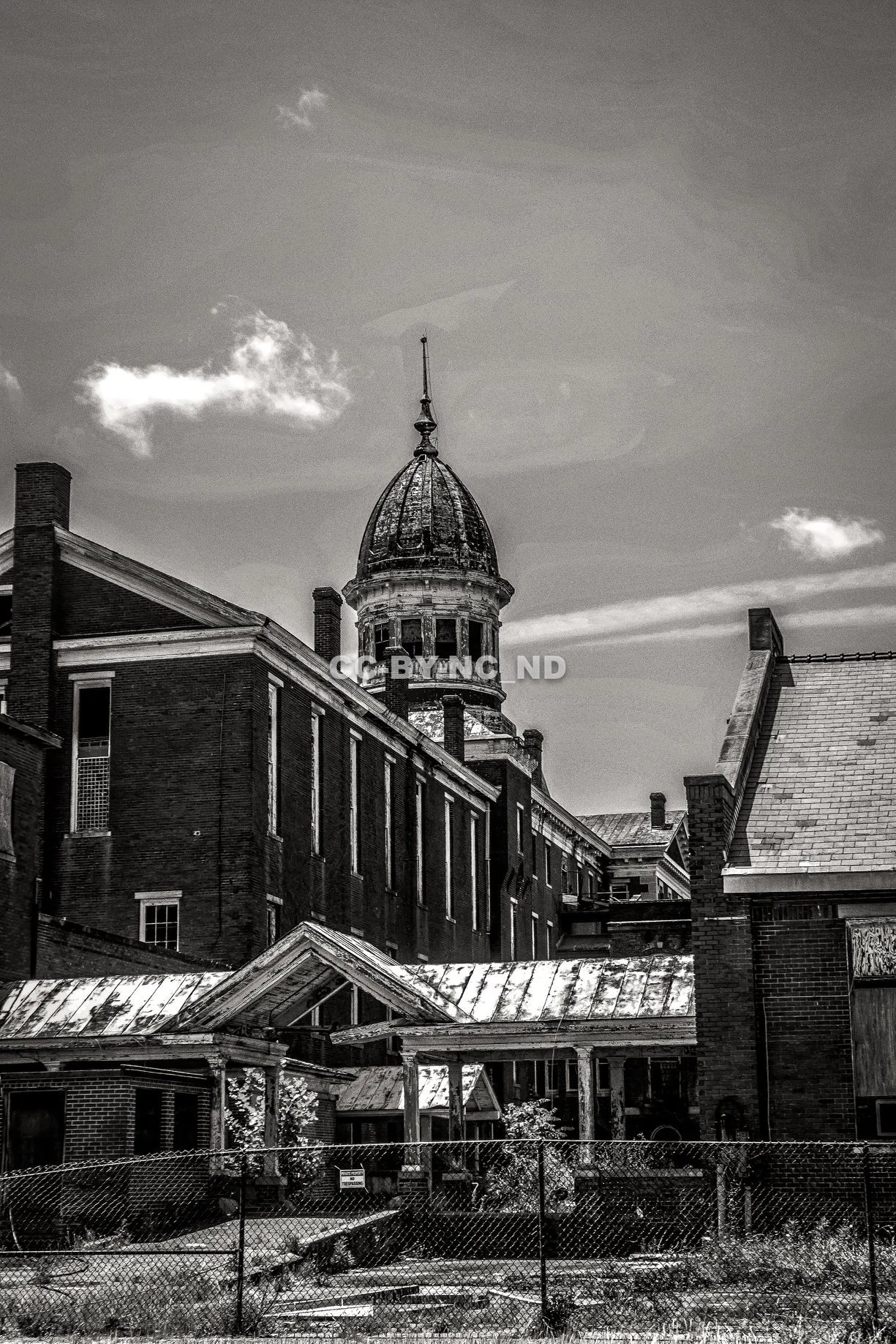
Babcock Building, rear view, former South Carolina State Hospital campus, Columbia, South Carolina.
From behind, the Babcock Building tells a different story than the formal domed entrance shown to the public. This is not the polished face of institutional authority, but the quieter, more private world where patients lived much of their daily reality. The rear facade reminds us that history often has two entrances: the one designed to impress outsiders, and the one that holds the more complicated truth. Here, Southern architecture becomes more than beauty. It becomes evidence—of care, confinement, separation, and the lives lived beyond public view.