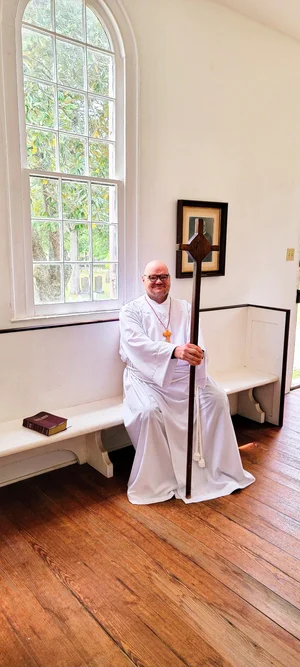
Learning to Stop Telling God the Plan
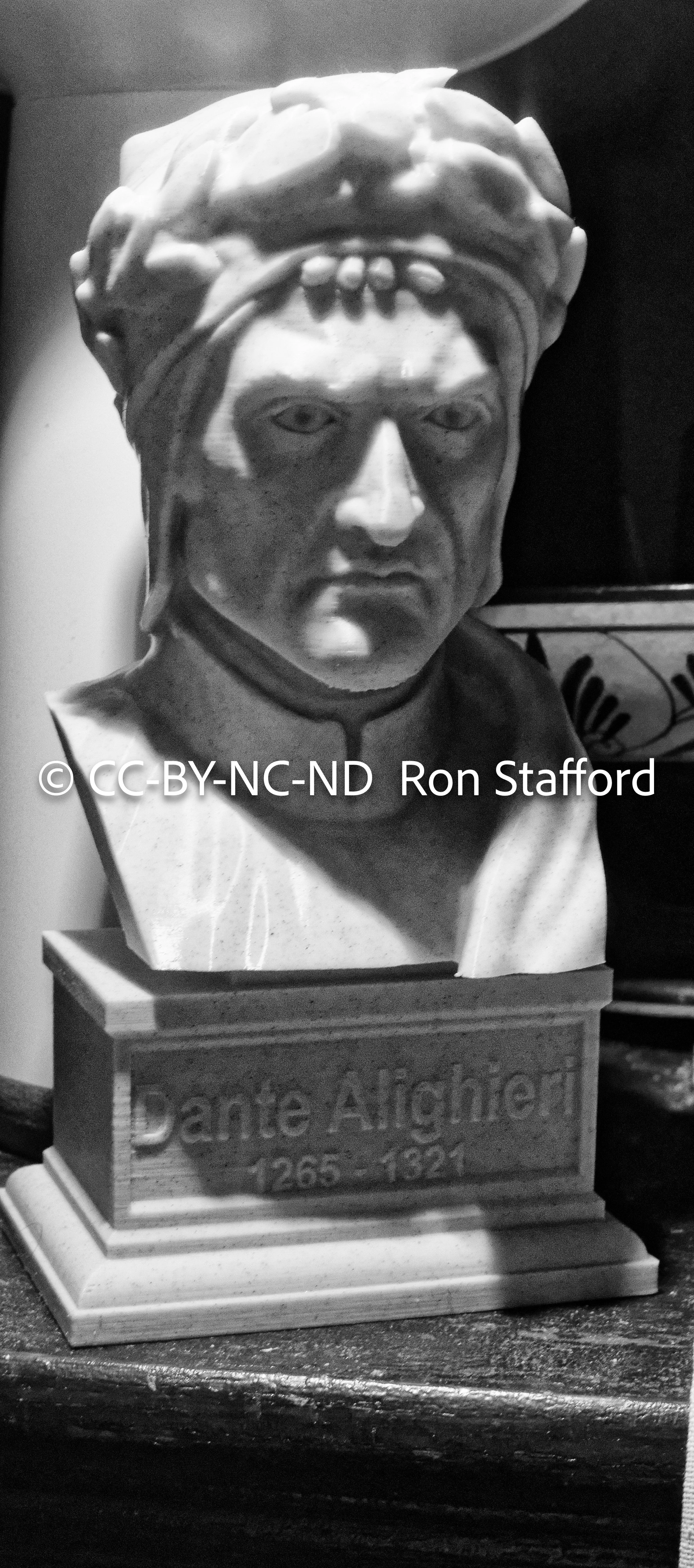
Dante Is Not Amused
There are moments in life when Dante feels less like a poet from the past and more like a witness sitting quietly in the corner, watching us stumble through our own dark wood. This image feels right for my current season. Stern. Searching. A little unforgiving. Dante understood that the soul rarely finds its way by comfort alone. In The Divine Comedy, the journey begins in confusion, loss, and fear—but it does not end there. The path through darkness becomes the path toward grace.
Lately, I have been thinking about the difference between asking God to bless the road I have already chosen and stopping long enough to ask where God is actually leading me. That is not an easy realization. It is humbling. It is uncomfortable. It is, in its own way, purgative. Dante is not amused—and perhaps that is the point. Sometimes the sternest faces are the ones reminding us to stop pretending we are in control, to listen more carefully, and to trust that even the dark wood may become holy ground.
Photo: Dante Alighieri, photographed by Ron Stafford.
For most of my life, I have tried to arrange my days around two questions: What do I want? And what do I believe God wants of me?
On paper, that sounds faithful. It sounds like discernment. It sounds like a person trying to live a life of intention, prayer, and purpose. But lately, in what I can only describe as a dark night of the soul, I have had to admit something harder: sometimes I have not been listening for God’s will as much as I have been asking God to bless mine.
That realization has not come easily. It has come through disappointment, physical pain, uncertainty, and more than a few closed doors.
When I accepted the job in Augusta, I believed I was stepping into a new chapter. I still believe there was something important in that decision. But almost immediately, I began running into roadblocks, especially when it came to finding an apartment. I had two appointments scheduled back-to-back to tour two different apartments. I had arranged my day, made my plans, and tried to move forward.
At both places, the leasing staff was not on site. The offices were closed.
Now, looking back, I wonder why I did not stop right there and ask, “God, are You trying to tell me something?”
Instead, my prayer became, “God, please let this work out for me. Please let me get this apartment.”
And yes, somewhere near the end of that prayer, I threw in the familiar phrase: “If this is Your will.”
But if I am honest, I think that little phrase was not always surrender. Sometimes it was insurance. Sometimes it was the spiritual language I added after I had already decided what I wanted. It was less “not my will, but Yours be done” and more “Lord, please approve the plan I have already written.”
That is a difficult thing to confess.
Jesus’ prayer in Gethsemane gives us the truer pattern: “Father, if you are willing, remove this cup from me, yet not my will but yours be done” (Luke 22:42, New Revised Standard Version). That is not passive resignation. It is holy surrender. It is the courage to place even our deepest fears, desires, and longings under the will of God.
I have had to think about that a great deal during this season with infection and the foot ulcer. When the doctor insisted that I needed a wound vac, I prayed hard. I asked God to please make it happen. And it did. At the time, I thought the door opening meant confirmation. I thought the answer itself meant the path was right.
But in the end, the wound vac has not been especially helpful. Now I am seeing another surgeon, one who seems to have new approaches and better possibilities for helping me heal.
That has forced me to ask a painful question: was I listening, or was I pushing?
Scripture reminds us that prayer is not magic and that God is not a divine rubber stamp for our own anxious agendas. First John says that “if we ask anything according to his will, he hears us” (1 John 5:14, NRSV). James goes even further, warning that sometimes “you ask and do not receive, because you ask wrongly” (James 4:3, NRSV). That verse has been sitting with me heavily. Not because I believe my prayers were selfish in some shallow way, but because I can see how fear, urgency, pride, and exhaustion can disguise themselves as faith.
I wanted the apartment to work. I wanted Augusta to be simple. I wanted the wound vac to be the answer. I wanted healing to follow the path I could understand.
But God’s path is not always the one I would have chosen. And sometimes the closed office, the missed appointment, the medical setback, and the uncomfortable pause are not failures. Sometimes they are invitations to stop, listen, and return.
Thomas Merton once prayed, “My Lord God, I have no idea where I am going” (Merton, 1958/2007). That line feels painfully honest to me right now. There is humility in admitting that we do not always see the road ahead clearly. There is also grace in realizing that we do not have to.
Proverbs says, “Trust in the Lord with all your heart, and do not rely on your own insight” (Proverbs 3:5, NRSV). I have quoted that verse many times. Living it is another matter.
Since late January, I can now see moments when I was not so much following God as trying to persuade God to follow me. I was telling God where I was going and asking Him to bless the itinerary. I was mistaking movement for obedience and urgency for faith.
But in this season, stripped down by illness, uncertainty, and dependence, I am beginning to hear something quieter. Not thunder. Not spectacle. Not dramatic certainty. Just that small, steady voice calling me back to trust.
Not my plan.
Not my timing.
Not my need to force every door open.
God’s will. God’s way. God’s pace.
That is where I am trying to stand now—not perfectly, not heroically, but honestly. I am learning that faith is not always about making the right thing happen. Sometimes faith is having the humility to stop forcing, stop bargaining, stop managing the outcome, and finally ask:
“Lord, what are You trying to show me?”
And then, perhaps for the first time in a long while, to be quiet enough to hear the answer.
References
Merton, T. (2007). Thoughts in solitude. Farrar, Straus and Giroux. Original work published 1958.
National Council of Churches. (1989). New Revised Standard Version Bible. Division of Christian Education of the National Council of the Churches of Christ in the United States of America.
The Holy Bible, New Revised Standard Version. (1989). National Council of Churches. Luke 22:42; James 4:3; 1 John 5:14; Proverbs 3:5.