La Commedia è Finita: When God Finally Stops Laughing at My Plans
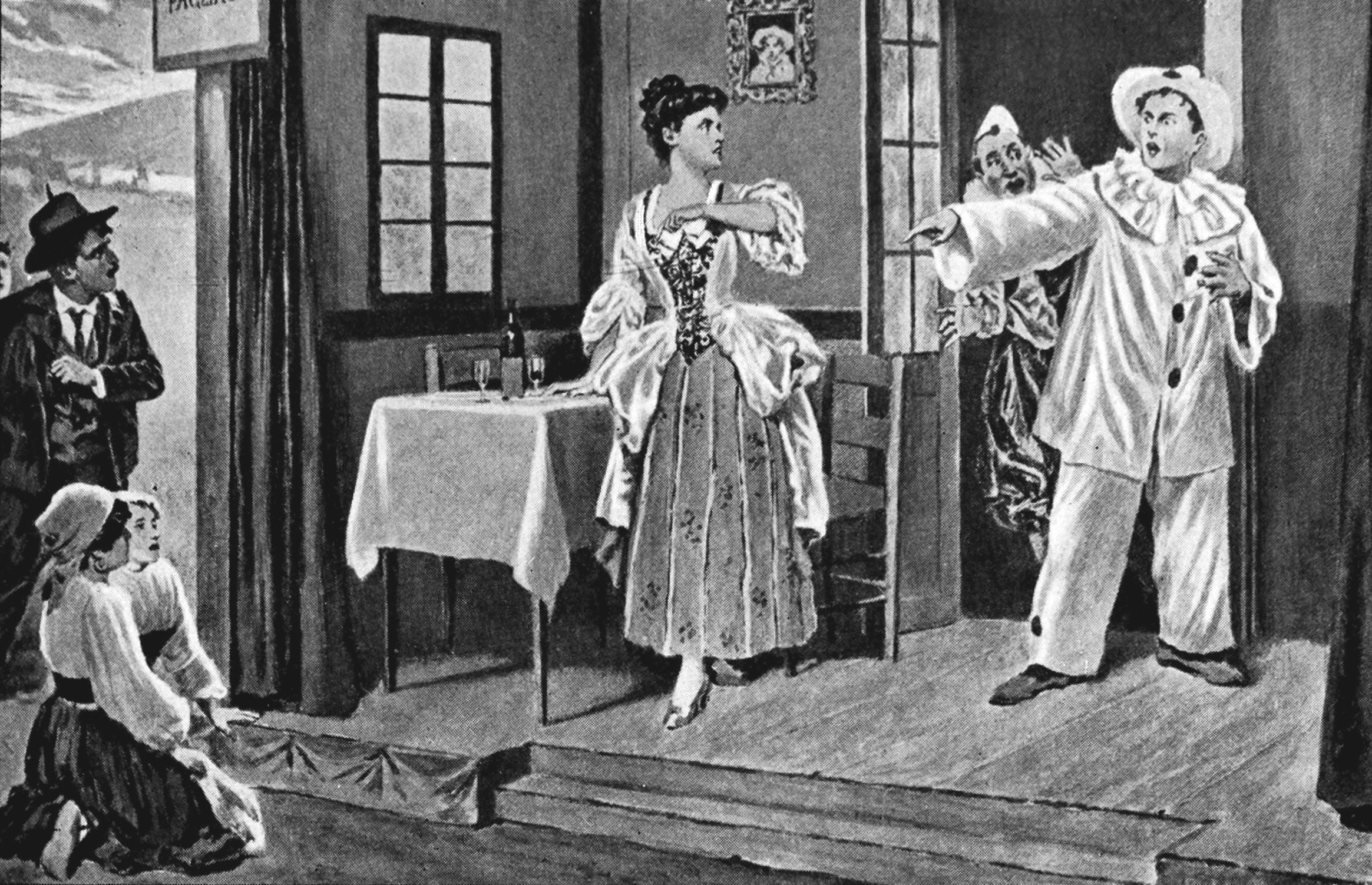
In this dramatic Act II scene from Leoncavallo’s Pagliacci, Canio demands the truth from Nedda: “Name him, or else I’ll kill you!” It is a perfect image for the moment when the mask finally slips, the comedy collapses, and all our carefully staged plans meet reality. For me, it also speaks to the spiritual truth I keep learning the hard way: we can perform control for only so long before God gently, and sometimes not so gently, reminds us who actually directs the drama.
For most of my life, I have had a very bad habit of making plans, arranging the furniture of my future exactly how I wanted it, and then presenting it to God like a completed PowerPoint presentation.
“Here you go, Lord. I have already worked out the timeline, the location, the desired outcome, the supporting documents, and the emotional soundtrack. All I need from You is a quick approval.”
And, of course, God in His infinite patience probably looked at all of that and said, “That is adorable.”
There is an old saying that when we make plans, God laughs. In my case, I am certain there have been whole heavenly productions staged around my attempts to control the plot. A full comedy of errors. Missed signs. Closed doors. Delayed answers. Detours I did not ask for. Lessons I tried very hard not to learn.
That is why the final line from Leoncavallo’s Pagliacci has been sitting with me: “La commedia è finita” — “The comedy is finished.”
In this dramatic Act II scene from Leoncavallo’s Pagliacci, Canio demands the truth from Nedda: “Name him, or else I’ll kill you!” It is the moment when the mask finally slips, the comedy collapses, and all the carefully staged plans meet reality. For me, it speaks to the spiritual truth I keep learning the hard way: we can perform control for only so long before God gently, and sometimes not so gently, reminds us who actually directs the drama. The line comes after the masks have fallen and the stage performance has become painfully real. It is dramatic, tragic, and very Italian — which is to say, subtle as a thunderstorm and twice as committed. If you want to hear the moving aria, click here: https://youtu.be/M7i1c_B4c_M?si=gcucNyt88bzpfLDU
But I keep hearing that line in a spiritual sense.
Maybe for me, La commedia è finita means the end of pretending that I can force my life into the shape I prefer and then ask God to bless it after the fact. Maybe it means the end of treating prayer like a permission slip for my own agenda. Maybe it means the end of saying, “Lord, Your will be done,” while secretly meaning, “but please let Your will look suspiciously like my plan.”
I am trying now to live differently.
Not perfectly. Let’s not get carried away.
But differently.
I am trying to listen before I leap. To ask before I arrange. To surrender before I start dragging furniture across the stage. I am trying to trust that God’s timing, even when inconvenient, may be wiser than my urgency. I am trying to believe that a closed door is not always rejection. Sometimes it is protection. Sometimes it is redirection. Sometimes it is grace with better boundaries than I have.
So yes, the comedy may not be entirely finished. I am still me, after all.
But I am learning.
I am learning that faith is not asking God to bless the script I already wrote. Faith is allowing God to revise the whole production, even when I was very proud of Act I.
La commedia è finita.
Or at least, I am working on it.
Image reference: Victor Talking Machine Company, & Rous, S. H. (1917). Leoncavallo—Pagliacci, act II—Canio: “Name him, or else I’ll kill you!” [Illustration]. In The Victrola book of the opera: Stories of one hundred and twenty operas with seven-hundred illustrations and descriptions of twelve-hundred Victor opera records. Wikimedia Commons.