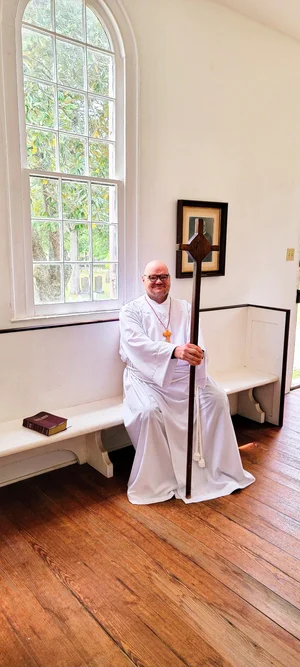
The Little Flame in the Cold Room: La Bohème , Faith, and the Art of Keeping Watch
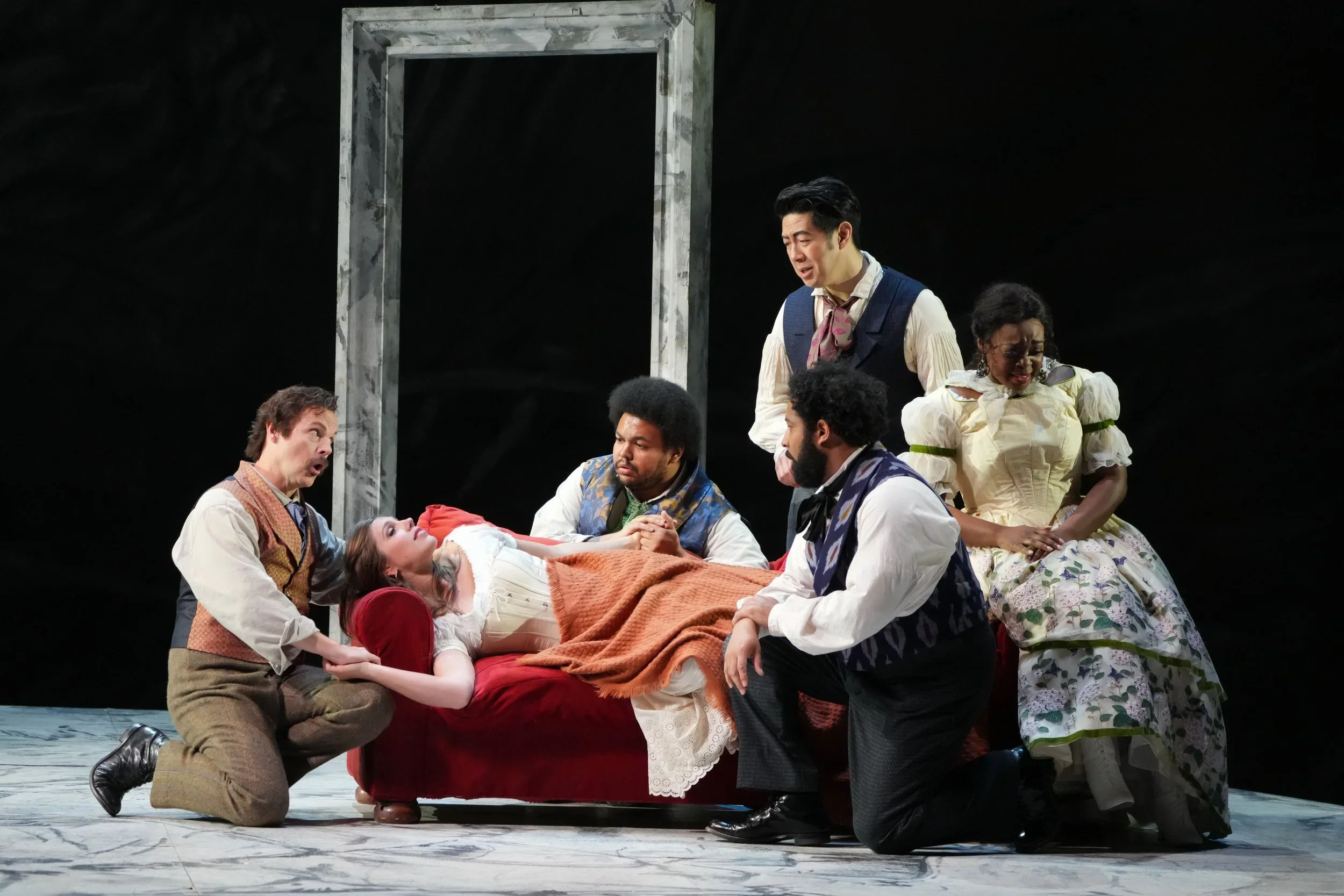
In LA Opera’s La Bohème, Mimì rests at the center of love, friendship, poverty, prayer, and approaching death—the small red couch becoming almost an altar where bohemian youth meets the awful holiness of goodbye.
There are operas one admires from a tasteful distance, like a well-bred person observing a tea service they cannot afford. Then there are operas that come into the room, sit beside the bed, take your hand, and tell you the truth before you are entirely ready to hear it.
For me, Puccini’s La Bohème is the second kind.
It is not simply an opera about young artists in Paris. It is a candlelit parable about life, death, beauty, poverty, friendship, prayer, and the terrible holiness of loving something that cannot stay. First performed in Turin in 1896, La Bohèmebelongs to that fin-de-siècle world where art, mortality, modernity, and spiritual hunger all seem to be sitting at the same small table, arguing over the last piece of bread (Giacosa & Illica, 1896; Puccini, 1896). Naturally, I adore it. My soul has always had one foot in a monastery and the other in a decaying parlor with dramatic wallpaper.
What moves me most about La Bohème is that its theology is not announced with trumpets. It enters with a woman looking for a light.
Mimì comes to Rodolfo’s door because her candle has gone out. That alone is enough to undo me. In Puccini’s world, love begins not with grandeur, but with need. A small flame fails. A neighbor knocks. A room becomes a chapel.
In Mi chiamano Mimì, she tells Rodolfo that she does not go to church often, but she prays much to the Lord. That line feels profoundly Carmelite to me. It is not polished public religion. It is not faith dressed for Sunday photographs. It is the hidden prayer of the white room. It is solitude before God. It is the soul looking out over rooftops and sky, waiting for thaw, waiting for spring, waiting for the first sun to touch the cold places again.
William James, writing only a few years after La Bohème premiered, described religion as rooted in the “feelings, acts, and experiences” of the individual soul in relation to the divine (James, 1902, p. 31). That is Mimì exactly. Her faith is not loud. It does not arrive carrying a theological treatise and a tote bag from an academic conference. It is inward, poor, tender, and stubborn. She lives alone. She works with artificial flowers. She watches the seasons from her little room. She knows beauty intimately but also knows its limits.
That is the wound at the center of the aria: Mimì makes flowers, but they have no scent.
Lord have mercy, if that is not the artist’s condition.
We make beauty, but we cannot make it live forever. We write, teach, photograph, sing, preach, decorate, arrange, design, and remember. We place buds in vases. We spy leaf after leaf. We try to recreate the fragrance of the living world, knowing all along that what we make is both holy and insufficient. Art is not resurrection, but it is resistance. Culture is not immortality, but it is a candle against the dark. Beauty may not save the body, but it can keep the soul from surrendering too early.
That is why La Bohème feels like a metaphor for life itself. We are all, in some way, living in a cold rented room. We are all making fragile things. We are all trying to keep warm. We are all waiting for the thaw.
And then there is Musetta.
If Mimì gives us the spirituality of the hidden room, Musetta gives us the spirituality of the deathbed.
By the final act, Mimì is dying, and the opera stops being merely romantic. It becomes monastic. The room is bare. The friends gather. Their wit, flirtation, hunger, and bohemian theatrics fall away. What remains is vigil. They become, almost accidentally, a little religious community. Not polished. Not orderly. Not approved by any committee, thanks be to God. But holy.
Musetta, whom the world might dismiss as vain or theatrical, becomes the one who prays. She murmurs to the Blessed Virgin, asking grace for Mimì, begging that she may not die, then correcting herself into hope: that she may be cured. In the middle of the prayer, she notices the lamp flickering and tells Marcello to shield it with a book. That moment is everything.
It is one of the truest images of faith I know.
Musetta prays, but she also tends the flame. She asks heaven for mercy, but she also warms the cordial. She invokes the Virgin, but she also pays attention to the draft in the room. Her prayer has hands. Her devotion has work to do.
That is supreme faith.
Not faith as sentiment. Not faith as churchy wallpaper. Not faith as the kind of pious phrase people say when they are trying to avoid doing anything useful. Musetta’s faith is incarnational. It kneels, but it also moves. It begs, but it also serves. It knows that sometimes the most sacred thing you can do is keep the lamp from going out.
And when she says she is unworthy of pardon, but Mimì is an angel from heaven, the whole opera becomes a theology of intercession. Musetta does not pray because she believes herself pure. She prays because Mimì is beloved. That is Christian love in its rawest form: not self-display, not spiritual performance, but pleading for another soul at the edge of death.
That is why I cannot treat La Bohème as simply sad.
Yes, it breaks the heart. It is supposed to. Some art should break the heart. A heart that never breaks becomes a decorative object, and I have no interest in becoming emotionally taxidermized. But La Bohème does more than wound. It reveals. It shows that faith is larger than certainty, that friendship is a form of shelter, and that art is one of the ways human beings refuse to let suffering have the final word.
I hear in Puccini a faith in God, yes, but also faith in art, culture, and people. Faith that a song can hold grief. Faith that a poor room can become sacred. Faith that beauty matters even when it fails to cure. Faith that the dying should not be left alone. Faith that somebody must guard the flame.
That is the Carmelite truth of the opera: the deepest encounters with God often happen in hidden rooms.
That is the Southern Gothic truth of the opera: beauty and death are rarely far apart, and both usually arrive without asking permission.
That is the monkish truth of the opera: when words fail, keep vigil.
Mimì’s little white room, her flowers without fragrance, her prayerful solitude, and her longing for spring all speak to the ache of being human. Musetta’s prayer at the deathbed speaks to the work of love. Together, they tell us that life is brief, beauty is fragile, and grace often comes disguised as a neighbor knocking at the door because her candle has gone out.
So yes, I love La Bohème.
I love it because it tells the truth about the human condition without becoming cruel. I love it because it understands that art is not an escape from suffering, but a way of entering suffering with a lamp in one hand and a prayer in the other. I love it because Mimì still looks toward spring. I love it because Musetta still prays. I love it because, even in that cold room, someone is trying to keep the flame alive.
And in the end, perhaps that is all any of us are doing.
We are making flowers that cannot quite smell like flowers.
We are praying in rooms where the light flickers.
We are loving people we cannot keep.
We are watching the sky for the first sign of thaw.
And by grace, by art, by culture, by friendship, and by the mercy of God, we are still guarding the little flame.
Do yourself a favor and watch the aria from a recorded live performance: https://youtu.be/I7CPY62_vFw?si=5FlXcWMozgk3aDQE&t=6206
References
Giacosa, G., & Illica, L. (1896). La bohème [Libretto]. In G. Puccini, La bohème [Opera]. Teatro Regio.
James, W. (1902). The varieties of religious experience: A study in human nature. Longmans, Green, and Co.
Puccini, G. (1896). La bohème [Opera]. Teatro Regio.
Weaver, C. (n.d.). Janai Brugger (center) as Mimì, with William Guanbo Su, Gihoon Kim, Oreste Cosimo, and Emmett O’Hanlon in LA Opera’s 2025 production of La Bohème [Photograph]. LA Opera. https://www.laopera.org/discover-la-opera/about-us/press-room/press-image-library/boheme-press-gallery